For decades, becoming a doctor has remained one of the most cherished dreams for students and families across India. Every year, lakhs of aspirants prepare for the NEET examination with the hope of securing an MBBS seat. However, with limited government seats and intense competition, many students have traditionally looked towards foreign medical universities as an alternative.
Until a few years ago, studying MBBS abroad appeared to be an attractive option. Lower tuition fees, comparatively easier admission procedures and aggressive marketing by overseas institutions encouraged thousands of Indian students to pursue medical education in countries across Central Asia, Eastern Europe and neighbouring nations.
In 2026, however, the global landscape of medical education has changed considerably. The decision to study medicine can no longer be based solely on affordability or ease of admission.
Today, students and parents must ask a much more important question: Will this medical degree prepare me to become a competent and licensed doctor?
Medical education is not merely about obtaining a degree. It is the foundation of a lifelong profession that demands knowledge, clinical skills, ethical values and continuous learning. Choosing the wrong institution or destination can have consequences that extend far beyond graduation.
The Changing Global Scenario
Several countries that were once considered popular destinations for Indian MBBS students are witnessing significant changes.
Iran continues to experience regional security concerns, while several universities have longer course durations.
Kazakhstan has introduced curriculum revisions and increased academic requirements in many institutions, making medical education more demanding than before.
Bangladesh remains an attractive destination for some students, but growing competition and changing academic standards have altered the admission landscape.
Uzbekistan has introduced policy changes affecting admissions and the number of international students. In Kyrgyzstan, although some institutions maintain good academic standards, the number of universities consistently meeting international expectations remains limited.
Georgia continues to attract international students, but applicants must carefully verify licensing pathways, recognition status and internship requirements before enrolling.
Russia faces continuing geopolitical uncertainty, which has created concerns for international education and student mobility.
Egypt offers recognised medical programmes, but many universities have comparatively longer course durations.
Tajikistan is emerging as a newer destination, although there is limited long-term data regarding graduate outcomes.
Ukraine, once a preferred choice for thousands of Indian students, continues to face major disruptions in medical education because of the ongoing conflict.
These developments do not necessarily mean that studying abroad is unsuitable for every student. However, they underline the importance of careful research before making a decision that will shape an entire professional career.
Looking Beyond Tuition Fees
Many families understandably focus on tuition costs while selecting a medical college. Yet the actual cost of an MBBS programme extends far beyond the fee structure.
Extended course durations, uncertainty regarding licensing requirements, varying quality of clinical exposure, language barriers during patient interactions, relocation expenses and evolving regulatory frameworks can significantly influence both the financial investment and the time required to begin medical practice.
Students should also consider whether they will receive adequate hands-on clinical training, exposure to diverse medical conditions and opportunities to work with experienced faculty. The real value of a medical college lies not simply in awarding a degree but in producing capable doctors who are prepared for independent medical practice.
Why Studying in India Makes Sense
India offers one of the world’s largest and most diverse patient populations, allowing students to gain broad clinical exposure and train within the healthcare system where many intend to practice.
Studying closer to home also provides emotional support from family, easier communication, cultural familiarity and reduced financial uncertainty. Instead of adapting to a completely different healthcare environment, students can focus on developing their clinical competence and professional skills.
Why Kashmir Medical College is an Ideal Choice
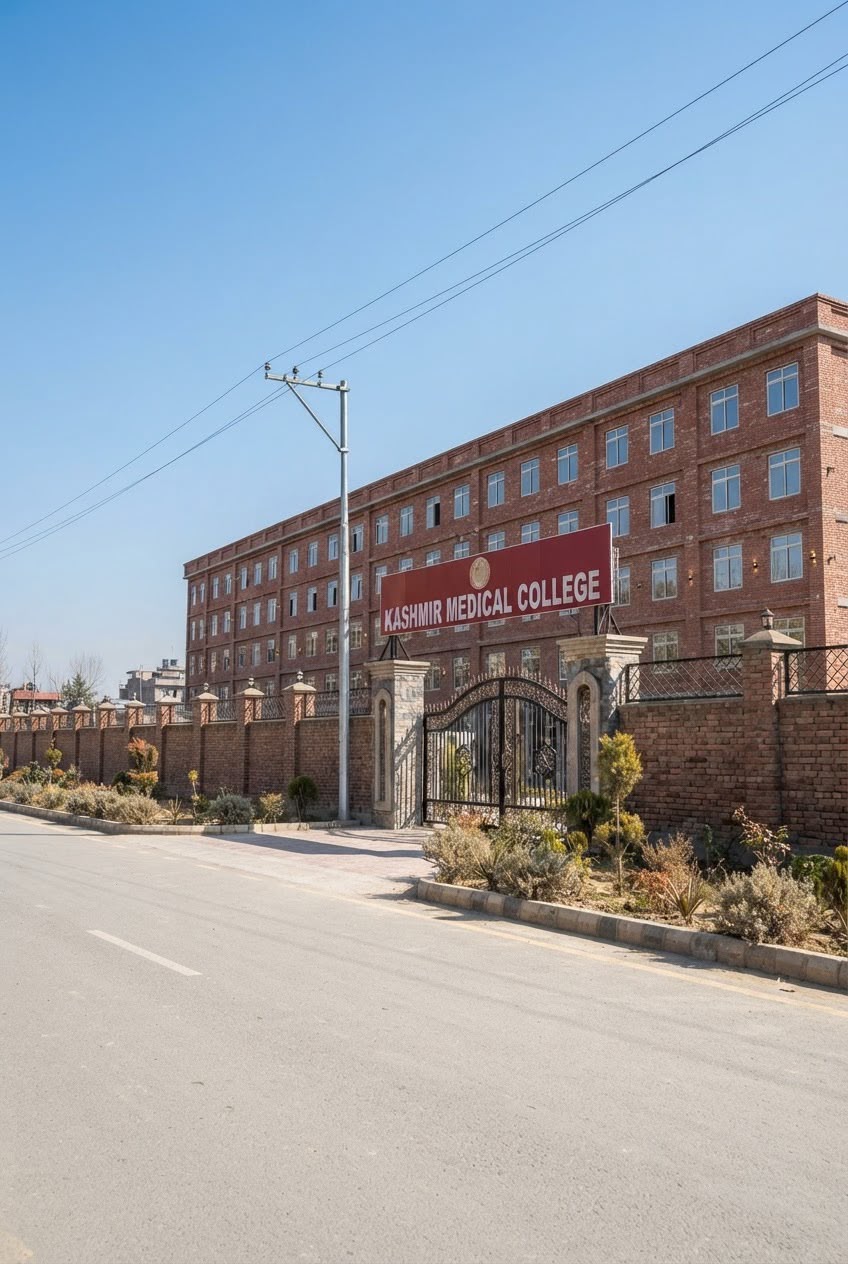
For aspiring doctors in Jammu and Kashmir, Kashmir Medical College (KMC), Sempora, offers an opportunity to pursue quality medical education without leaving the Valley.
As the first private medical college in Kashmir affiliated with the University of Kashmir, KMC combines modern infrastructure with a growing academic ecosystem focused on excellence in medical education.
Students benefit from advanced teaching facilities, simulation-based learning and well-equipped laboratories that enhance practical understanding.
The institution’s multispecialty teaching hospital provides extensive clinical exposure, enabling students to interact with patients across a broad range of specialties from the early years of training.
KMC is supported by experienced faculty members, mentoring and professional development. The college is equipped with modern medical technology and advanced diagnostic and surgical facilities comparable to those available in leading hospitals in major Indian cities.
Alongside academics, equal importance is given to ethics, professionalism, research, communication skills and patient-centred care. The institution aims not only to produce successful graduates but also compassionate physicians.
For students from Jammu and Kashmir, studying closer to home also means remaining connected to their families while receiving quality education in a safe, supportive and familiar environment.
Choosing Your Future
Selecting a medical college is among the most important decisions a student will ever make. It should never be influenced solely by promises of easy admission. Instead, students must carefully evaluate institutional recognition, quality of teaching, clinical exposure, internship opportunities, licensing pathways, faculty strength and long-term career prospects.
Medicine is a profession built on responsibility, competence and trust. Every patient deserves treatment from a doctor who has received rigorous training and meaningful clinical experience.
As students prepare to begin their medical journey in 2026, the goal should not simply be to obtain an MBBS seat. The goal should be to become a skilled, compassionate and confident doctor.
At Kashmir Medical College, we are committed to nurture future physicians who combine scientific knowledge with ethical values, clinical competence and a commitment to patient care. The right choice today can define not only a successful career but also a lifetime of service to humanity.
Insha S. Qazi is Executive Director of Kashmir Medical College & Hospital (KMC&H) and writes on medical education and healthcare systems in Jammu & Kashmir