PM Declare Zero Tolerance against organised cheating Syndicates
Says “ Any paper leak mafia committing crime of paper leaks won’t be spared”
New Delhi: In a major legislative push to restore integrity to competitive exams, Parliament has passed the Public Examinations (Prevention of Unfair Means) Amendment Bill, 2026, introducing significantly harsher penalties, Special Fast Track Courts, and strict timelines for investigations.
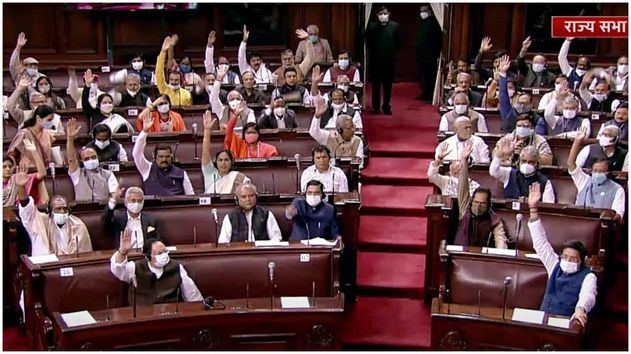
Welcoming the passage of the legislation following the Rajya Sabha’s approval—where Opposition MPs staged a walkout—Prime Minister Narendra Modi assured the nation that organized syndicates subverting the country’s examination ecosystem would face severe legal consequences. Welcoming the bipartisan debate across both Houses, PM Modi stated, “Friends, for a reliable examination system, we are continuously taking one step after the other… every state and the central government has been facing this kind of paper leak trouble for several decades.” Emphasizing a zero-tolerance policy against organized cheating syndicates, the Prime Minister added, “If any paper mafia, the gang doing paper leaks, the gang playing with the future of the country’s children–they will not be spared. Therefore, stringent laws are also needed.” Replying to the debate, Union Minister of State Jitendra Singh defended the legislation as an indispensable shield for over 7.65 crore students, framing it alongside broader educational reforms like the National Education Policy (NEP) 2020, which he described as a “game changer” that has “liberated students from the slavery of choices made by their parents, guardians, and elders.”
While the Congress party supported the measure in principle, Leader of Opposition in the Rajya Sabha Mallikarjun Kharge criticized the amendment as mere “cosmetic changes,” arguing that it lacked sufficient safeguards to guarantee leak-free testing without systemic recruitment overhauls. Kharge pressed the government for structural reforms and a fixed annual examination schedule to eliminate youth uncertainty, stating, “My demands are straightforward: First, there should be a fixed annual examination calendar in the country so that students do not have to face uncertainty. Second, an investigation into this matter should be conducted by a Supreme Court-appointed high-powered committee so that the truth comes to light and accountability is fixed. Third, all vacant positions in the public sector and government institutions should be filled through recruitment.” Under the amended provisions awaiting Presidential assent, individual penalties for using unfair means will increase to between 5 and 10 years imprisonment alongside fines up to ₹50 lakh. For organized examination crime syndicates, minimum jail terms have been elevated from five to seven years (extendable up to 10 years) with maximum fines capped at ₹10 crore, while complicit service providers face fines up to ₹5 crore and an eight-year operational ban. Crucially, the law empowers the Centre to form a Special Task Force and mandates that investigations be wrapped up within two months, followed by trials in designated Courts of Session completed within three months of charge sheet filing.