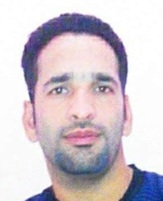
Real leadership is not shaped in comfort or built through words. It is forged in long periods of uncertainty where people continue to give their time while receiving nothing in return. It reveals itself when silence becomes heavy, when hope begins to weaken, and when people start questioning whether their struggle has any meaning. A true leader does not stand above this reality. He enters it. He absorbs the pressure, understands the fear, and responds with action. He does not perform for attention. He carries responsibility even when there is no recognition. This is where leadership gains moral weight, and this is where it becomes real. In this reality stands Gh Jeelani Lone, leader of vocational teachers, who did not allow position to create distance between himself and his people. He remained present in moments when nothing was visible, when no document was circulating, when there was no opportunity to claim credit. He understood that a teacher’s struggle is not limited to policy language. It is a daily psychological burden, a continuous uncertainty about survival and dignity. He chose consistency over visibility, unity over control, and responsibility over comfort. He did not divide people into groups to strengthen his own hold. He unified them to strengthen their voice. This is why trust formed around him without force. It was not built through slogans. It was built through repeated action.
Now consider the reality of Rehbar-e-Khel teachers, and the contrast becomes deeply painful. This is not a short phase of difficulty. It is the accumulation of seven years of waiting, of believing, of holding onto promises that never translated into reality. Teachers gave their youth to this system. They fulfilled their responsibilities with the expectation that stability would follow. Instead, they received delay, confusion, and silence. From the beginning, leadership failed to establish direction. Instead of creating one strong collective voice, teachers were divided into associations, forums, and multiple identities that weakened their strength. Titles changed, but the outcome remained the same. Nothing moved forward. Today, the situation stands as a harsh reflection of that failure. Policy exists. Approval exists. Probation is complete.
Time has already been given beyond reason. Yet teachers still feel unrecognized, as if their existence holds no value within the system. This is not a technical delay. It is a structural failure caused by absence of sustained pressure and absence of unified leadership. When leadership does not push consistently, systems become comfortable in ignoring. The emotional cost of this failure cannot be measured in files or documents. It is visible in homes where financial stress has become routine. It is present in minds that carry anxiety about the future. It is reflected in the lives of those teachers who spent years waiting and lost their strength along the way. Some even lost their lives during this prolonged uncertainty. This is the depth of the damage. It is not abstract. It is human, and it is irreversible for many.
“Seven years of hardship have caused enough damage; they must not be allowed to ruin the future. True respect is earned through dedicated action, presence in struggle, and quiet service—not titles—a distinction that has now become painfully clear.”
What makes this reality even more painful is the behavior of leadership during this period. Instead of standing firm, they remained silent during critical phases. Instead of building unity, they allowed groupism to grow. Instead of creating pressure, they became part of the confusion. And when moments appeared where something official surfaced, they suddenly became visible. Statements were released. Credit was claimed. Presence was shown. Then silence returned. This pattern exposed a leadership that reacts for visibility but fails in responsibility. Even now, when individuals try to break this cycle and bring movement, they face resistance. Leg pulling begins. Efforts are questioned. Progress is slowed. This reveals a deeper problem.
Leadership that fears losing control begins to block change instead of supporting it. This transforms failure into a continuous condition where solutions are prevented from emerging. Time does not remain stable. Situations change without warning. Governments change. Policies shift. Opportunities disappear. Delay at this stage is not neutral. It is dangerous. Every moment lost increases the risk that this struggle will extend even further or collapse entirely. This is why waiting is no longer an option. The cost has already become too high. There is a clear lesson visible through all of this.
Leadership is not about holding a position. It is about carrying responsibility under pressure. It is not about speaking at the right time. It is about standing at all times. It is not about claiming credit. It is about creating results. Without unity, discipline, and honesty, even the strongest policy remains trapped in paper without impact. Teachers now stand at a decisive point. Whether to remain divided and continue this cycle of delay, or to stand united and create the pressure required for change. Whether to accept noise or demand results. Because the future will not change through patience alone. It will change through collective strength and honest leadership.
Seven years have already taken enough. They have taken time, stability, and peace of mind. They should not be allowed to take the future as well. The reality is clear, and the choice can no longer be avoided. Respect does not belong to titles or positions. It belongs to those who remain present in struggle, who protect unity, who work without seeking attention, and who deliver without asking for credit. Today, that difference stands exposed with painful clarity.
(The author a teacher by profession is a freelancer. The views, opinions and conclusions expressed in this article are those of the author and aren’t necessarily in accord with the views of “Kashmir Horizon”)