Study on Sonamarg’s iconic glacier reveals alarming retreat, raising concerns over water security, ecosystems and the future of Himalayan tourism
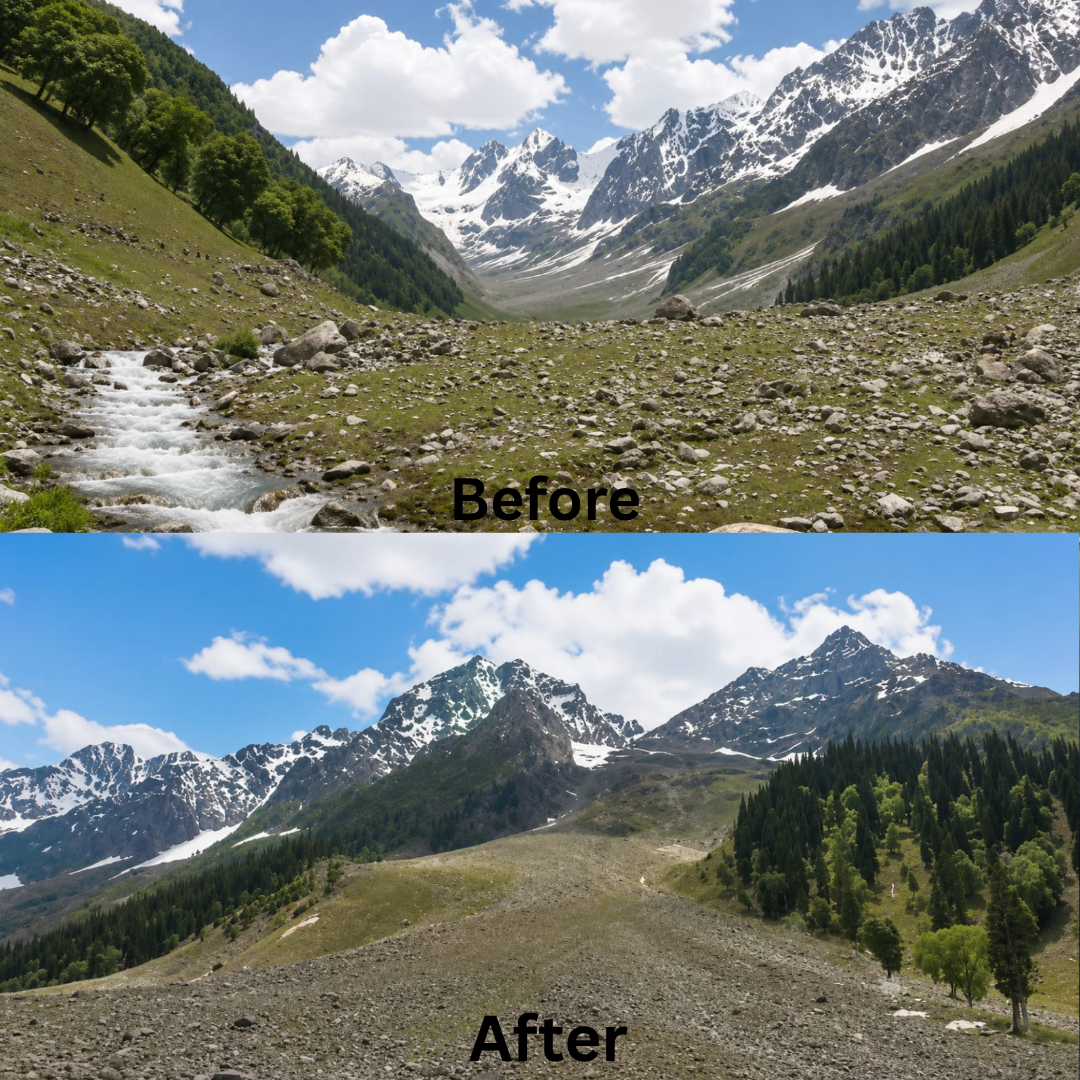
Ganderbal, June 13 : In a stark reminder of the accelerating climate crisis unfolding across the Himalayas, a recent study has found that the Thajiwas Glacier, located in the Sonamarg region of central Kashmir’s Ganderbal district, has lost nearly 95 percent of its ice mass over the years.
The findings point to a dramatic retreat of one of Kashmir’s most recognisable glaciers, underscoring the growing impact of rising temperatures, declining snowfall and changing weather patterns linked to global climate change.
Long celebrated for its scenic beauty and perennial snow cover, the Thajiwas Glacier has for decades been a major tourist attraction and an important environmental asset. Researchers, however, say its rapid shrinkage reflects a wider pattern of glacial decline being witnessed across the Himalayan region.
According to the study, the glacier’s retreat serves as a critical indicator of the environmental transformations taking place in the mountains, which are often referred to as the world’s “Third Pole” due to their vast reserves of freshwater.
Scientists warn that the continued loss of glacial ice could have far-reaching consequences for Kashmir and beyond. Himalayan glaciers act as natural water reservoirs, feeding rivers and streams that sustain agriculture, drinking water supplies, hydropower generation and local ecosystems.
“The retreat of Thajiwas is a stark indicator of the environmental transformations taking place in the Himalayas,” the researchers noted, cautioning that unchecked warming could further destabilise fragile mountain environments.
Environmental experts have expressed concern that shrinking glaciers may alter seasonal water flows, increase the risk of water stress and place additional pressure on ecosystems already vulnerable to climate-related changes.
The findings have also raised questions about the future of tourism in Sonamarg, where Thajiwas remains among the region’s most visited attractions and a significant source of livelihood for local communities.
Describing the study as a wake-up call, experts urged governments and policymakers to strengthen climate adaptation measures, enforce environmental safeguards and promote sustainable development in ecologically sensitive areas.
As glaciers across the Himalayan belt continue to recede at an unprecedented pace, the fate of Thajiwas is emerging as a powerful symbol of a changing climate. Researchers say the story of the glacier is not merely about the disappearance of ice, but about the future of a region whose environment, economy and communities remain deeply intertwined with the health of its mountains.