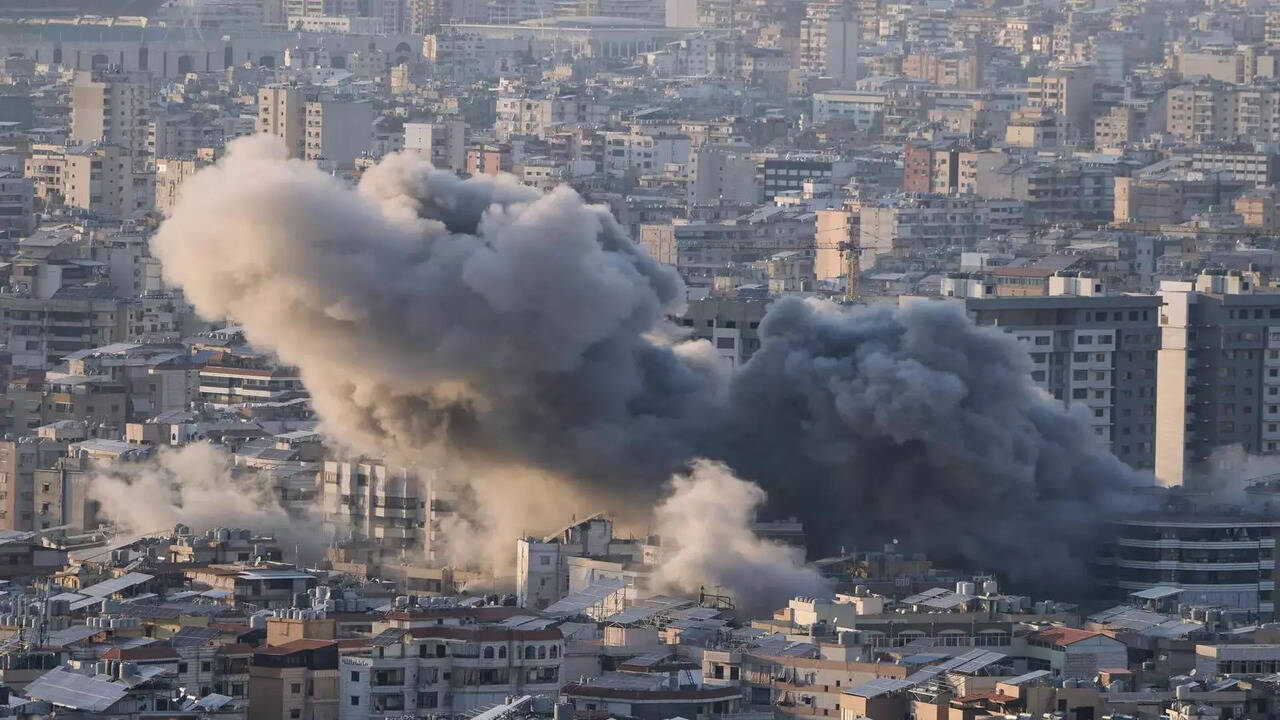
Kuwait City, June 3 (UNI) An Indian national has been killed and at least 63 others injured after Iranian missiles and drones struck Kuwait International Airport on Wednesday, in a significant escalation of hostilities across the Gulf region.
The Indian Embassy in Kuwait confirmed the death and said it was coordinating with local authorities to support the victim’s family.
According to Kuwait’s Health Ministry, at least 63 people were injured, including airport staff and passengers. Kuwaiti authorities reported damage to airport infrastructure and nearby diplomatic facilities during the attack. One person was killed, while several others sustained injuries.
Moreover, flight operations at Kuwait International Airport were temporarily suspended following the incident.
Kuwait’s health ministry also informed that seven people require emergency surgeries.
Terminal 1 of the airport sustained severe damage, forcing a suspension of all flight operations before services resumed from Terminal 4 after safety assessments were completed, as per the Kuwaiti News Agency KUNA.
The Kuwaiti military said it intercepted 13 ballistic missiles and 17 drones since dawn, though debris fell across several residential areas.
The attacks drew swift condemnation from across the region. Saudi Arabia strongly condemned Iranian attacks on Bahrain and Kuwait on Wednesday as a “clear violation” of international law.
In a statement, the Foreign Ministry expressed its “strongest condemnation and denunciation of the brutal Iranian aggression and the blatant violation” of the sovereignty of Bahrain and Kuwait.
Reiterating its “categorical rejection” of the attacks, the ministry said the strikes constitute a “clear violation of international law and the Charter of the United Nations” and undermine international efforts aimed at restoring security and stability in the region.
It renewed its solidarity with Bahrain and Kuwait and “full support” for any measures they take to safeguard their sovereignty, security and stability.
UAE presidential adviser Anwar Gargash called for a unified Gulf response, warning that the strikes carried broader implications.
“The aggression does not target one country alone, but all of us,” he said.
Lebanon’s President Joseph Aoun also condemned the strikes on civilian sites in Kuwait and Bahrain, while in Bahrain authorities reported intercepting three missiles and several drones. Iran claimed its forces had targeted the headquarters of the US Fifth Fleet, an airbase, and military helicopters in the region.
US Central Command said the Iranian strikes largely failed to reach their intended targets. Washington confirmed it had carried out operations near the Strait of Hormuz, including action against a tanker heading toward Iran. The strikes Tehran condemned as violations of international law and an existing ceasefire framework dating to 8 April.
Iran’s foreign ministry warned it would “utilise all capacities to counter aggressive actions”, placing responsibility on Kuwait and Bahrain for allegedly permitting their territory to be used in operations against Iran.
Global oil prices rose more than 2% amid mounting concern over security in the Strait of Hormuz, a critical shipping route handling a significant share of the world’s oil and gas exports.
Meanwhile, US President Donald Trump claimed Iran had agreed not to pursue nuclear weapons and said Supreme Leader Mojtaba Khamenei was involved in discussions with Washington.
Iran, however, has consistently maintained its nuclear programme is intended solely for peaceful purposes.