Jaipur, May 7 (UNI) India on Thursday said Operation Sindoor rewrote New Delhi’s cross-border retaliation doctrine and inflicted such severe battlefield losses on Pakistan that Islamabad was eventually “pleading for ceasefire.”
Simultaneously, the armed forces revealed that the conflict has triggered a major transformation of India’s military structures, force posture and warfighting capabilities for future operations.
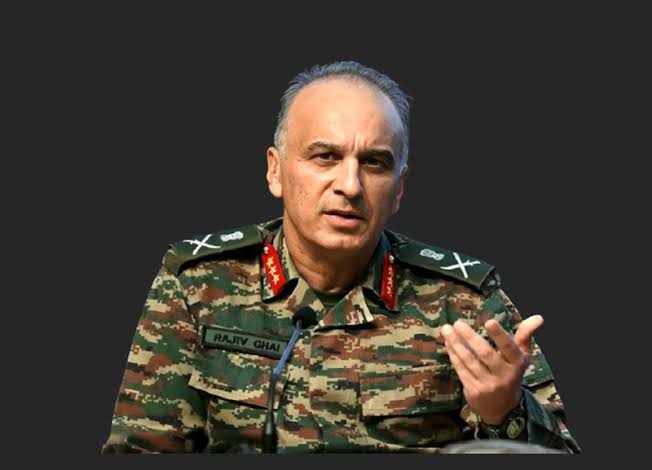
Former Director General Military Operations Lt Gen Rajiv Ghai said India’s ongoing military transformation is being shaped directly by lessons learned during Operation Sindoor.
“Why is the transformation going on? Because we have imbibed some lessons from Operation Sindoor. Because of those lessons, we felt that we have to make some changes in our structures, in our organizations, in our equipment. So, that preparation is going on,” he said.
Responding to questions on Pakistan’s eventual request for cessation of hostilities, Lt Gen Ghai said the scale of damage inflicted by India forced Islamabad to seek a ceasefire.
“You just heard the statistics. If I was to add the damage that we caused on the Line of Control, inadvertently their honours and awards list, which was out in the internet domain, told us that so many of those awards were given posthumously. So, the numbers that they suffered on the Line of Control in the exchanges that followed, they lost more than 100 soldiers. That number is in excess of 100,” he said.
He added that India’s strikes also eliminated major terror infrastructure. “100 terrorists were killed in those nine terrorist camps. So, there was an innumerable amount of damage which compelled them.”
Taking a swipe at Pakistan’s post-conflict narrative warfare, he said:
“At the end of the day, if the Pakistanis were to make the same amount of investment in their battle fighting ability as they do in the narrative, I think they would have fared much better. That’s advice they could take.”
Lt Gen Ghai said India’s decisiveness during Operation Sindoor stemmed from a clear political mandate and military planning.
“A clear and precise political mandate was there. And operational freedom was given to us. We were very, very clear at the initial stages that we would neutralize the terror infrastructure.”
He said the military leadership had also built escalation controls into operational planning.
“We had formulated at the Chiefs of Staff Committee level a clearly defined escalation control mechanism wherein we were to look at calibrated and graded response to each event.”
According to him, the scale of India’s retaliation ultimately forced Pakistan’s military leadership to seek an end to hostilities.
“The joint integrated military action by all three forces probably impacted the minds of the political and military leaders of Pakistan. And that’s why the Pakistan DGMO had to approach the DGMO Indian Army pleading for a ceasefire. That is the meaning, pleading for a ceasefire.”