- Police Map Out J&K’s Narcotic Ecosystems
Srinagar: The ongoing Nasha Mukt Jammu Kashmir Abhiyaan has entered a sharper enforcement phase as Jammu and Kashmir Police escalated action against drug trafficking networks across the Valley, shifting focus beyond street-level arrests to dismantling the financial structures that sustain the narcotics trade. In a significant development, police authorities in Srinagar moved to attach immovable properties linked to individuals accused of drug trafficking, marking a decisive step in targeting assets believed to have been generated through illegal narcotics proceeds. Officials said the action has been taken under provisions of the NDPS Act as part of a broader strategy to ensure that crime does not remain profitable.
The attached properties include residential structures and land holdings in a Srinagar locality, identified during investigation as having a direct link with proceeds of narcotics trade. Authorities said such assets are now being treated as part of the criminal economy and are being legally frozen to prevent further misuse or transfer. Police described the action as part of a sustained effort to dismantle the “profit cycle” of drug networks, explaining that arrests alone are not sufficient unless the financial infrastructure of trafficking is also systematically destroyed. Officials said this approach is intended to send a strong message that involvement in drug trade will lead not only to imprisonment but also complete economic collapse.
Shift in Strategy | Targeting Drug Economy Alongside Criminals: Officials involved in the operation said the anti-drug drive in Jammu and Kashmir is now operating on a dual-track model—aggressive enforcement on one hand and financial investigation on the other. While earlier efforts primarily focused on seizures and arrests, the current phase is increasingly targeting assets, money trails, and property acquisitions linked to drug money. Investigators are tracing how proceeds from narcotics sales are converted into immovable assets, and legal mechanisms are being used to freeze and attach such properties during ongoing investigations. This, officials said, ensures that traffickers cannot reinvest illegal gains into expanding their networks. Authorities stressed that drug trafficking is no longer being viewed as isolated street crime but as an organized financial system with deep linkages, requiring coordinated disruption at every level.
Kupwara| Enforcement, Surveillance Intensifies: In Kupwara district, police have intensified enforcement measures under close coordination with civil administration as part of the ongoing anti-narcotics campaign. Law enforcement agencies have strengthened surveillance in identified vulnerable pockets and are continuously monitoring suspected routes used for drug movement. Investigators have initiated legal proceedings in multiple narcotics-related cases and are actively pursuing individuals who have gone underground. Police have also begun issuing formal notices to absconders, tightening pressure on those attempting to evade arrest. Alongside this, verification drives are being conducted in sensitive areas to ensure that no external or suspicious elements are contributing to the drug network. Officials said the verification process is aimed at strengthening ground-level intelligence and preventing misuse of residential or commercial spaces for narcotics activity. Medical establishments are also under increased scrutiny. Regular inspections are being carried out to ensure that controlled pharmaceutical substances are not diverted into illegal drug supply chains. Authorities said this step is crucial as misuse of prescription drugs has emerged as a parallel concern alongside traditional narcotics.
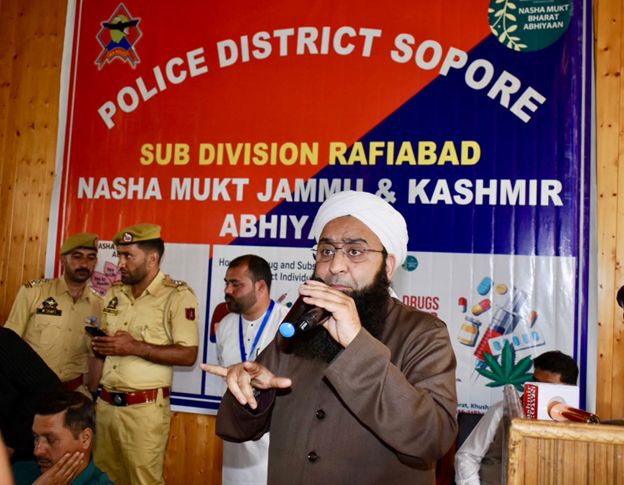
Community Engagement, Awareness Drive Expands: While enforcement action continues, police have simultaneously expanded outreach efforts under the Nasha Mukt Jammu Kashmir Abhiyaan. Awareness programmes are being conducted across educational institutions and public spaces to educate youth and families about the dangers of drug abuse. Authorities said the objective is to build a strong social resistance against narcotics by involving students, teachers, civil society groups, and local communities. Messages focus on early detection of addiction, prevention strategies, and the importance of reporting suspicious activity to law enforcement. Police have encouraged citizens to actively cooperate with the campaign and share information about drug-related activities. Officials emphasized that community participation is essential for identifying hidden networks that often operate quietly within localities.
Focus On Intelligence-Based Policing: Security officials said the current phase of the campaign relies heavily on intelligence-based policing rather than routine checkpoints alone. Inputs from local sources, surveillance data, and financial investigations are being combined to identify key nodes in the drug supply chain. Investigators are also tracking patterns of movement, communication, and financial transactions associated with suspected traffickers. This integrated approach, officials said, is helping in building a clearer picture of how narcotics networks operate across districts. Authorities added that coordination between different police units and administrative departments has significantly improved operational efficiency, allowing faster action on verified inputs.
Legal Pressure, Asset Seizure Strategy: The use of legal provisions to attach assets is being seen as a turning point in the anti-drug campaign. Officials said this strategy ensures that even before final conviction, illegally acquired wealth can be restricted and preserved for legal proceedings. Law enforcement agencies are now increasingly relying on financial investigation units to trace money flows linked to narcotics trade. This includes examining property records, banking patterns, and investment activities suspected to be funded through illegal means. Officials said this financial pressure is expected to deter individuals from engaging in drug trafficking, as it removes the incentive of profit that often drives the trade.
A Sustained Push Towards A Drug-Free Society: Police reiterated that the Nasha Mukt Jammu Kashmir Abhiyaan is not a short-term operation but a long-term mission aimed at transforming society. The campaign integrates enforcement, awareness, rehabilitation, and financial disruption into a single framework. Authorities said that sustained pressure on drug networks, combined with public awareness and institutional cooperation, is essential to achieving lasting results. They further stressed that the fight against drugs is as much social as it is legal, requiring families, educational institutions, and communities to work alongside law enforcement.
Expanding Crackdown Signals New Phase Of Anti-Drug War: The latest actions across Jammu and Kashmir reflect a clear shift in the anti-narcotics strategy—from reactive enforcement to proactive dismantling of entire drug ecosystems. By targeting financial assets, strengthening surveillance, and expanding public engagement, police are attempting to cut off both supply chains and economic incentives driving the drug trade. Officials said the campaign will continue with increased intensity, focusing on identifying hidden networks, disrupting financial gains, and building stronger community resistance against substance abuse. As the Nasha Mukt Jammu Kashmir Abhiyaan moves forward, authorities say the objective remains clear: to ensure that drug networks lose their operational strength, financial base, and social space in the region, paving the way for a safer and healthier society.