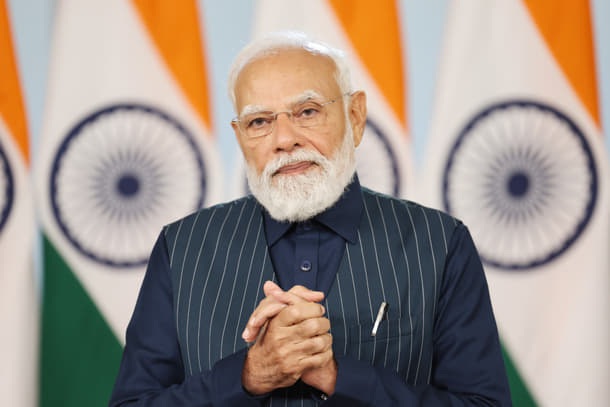
New Delhi, Apr 13 (UNI) Prime Minister Narendra Modi on Monday declared that India stands on the cusp of a historic decision on women’s political representation, describing the proposed women’s reservation legislation as one of the most consequential steps toward gender equality in the 21st century while addressing the Nari Shakti Vandan Sammelan in Delhi.
Emphasising that “our Parliament is on the verge of making new history,” Modi said the move would embed social justice into the country’s governance framework and transform the role of women in decision-making.
“This history will fulfill the visions of the past and the promises of the future, fostering an India where equality and justice are not mere slogans but lived realities,” he said.
Highlighting the contributions of women across sectors, the Prime Minister noted that India’s “Nari Shakti has made immense contributions” and continues to break barriers in fields once considered male-dominated. He pointed to grassroots governance as a powerful example, stating that Panchayati Raj institutions showcase “a remarkable example of women’s leadership,” where women have played a decisive role in shaping local development and governance.
“Today, women are excelling even in sectors once considered male-dominated. India’s Nari Shakti has reached new heights through their hard work, courage and confidence,” Modi said, adding that the government remains committed to “supporting women at every stage of life.” He called for a collective push to further expand opportunities, asserting that the next phase of development must be anchored in deeper empowerment of women.
The Prime Minister also underlined the long political journey behind the women’s reservation proposal, noting that the demand has been part of national discourse for nearly four decades. “For decades, every party and generation has contributed to this cause in their own way,” he said, signaling broad-based political consensus around the issue.
With Parliament scheduled to take up detailed discussions on the matter starting April 16, Modi expressed optimism that political parties would rise above differences to ensure its passage. “With everyone’s collective efforts, the dignity of the entire House will reach new heights. Every woman in the country will be proud that all parties have risen above politics to advance this vital cause,” he said.
The proposed legislation, linked to the implementation of the Nari Shakti Vandan Adhiniyam, 2023, seeks to reserve seats for women in legislative bodies, a move widely seen as a landmark reform aimed at correcting historical underrepresentation. The government has indicated that its implementation is targeted in alignment with broader electoral and administrative timelines, including delimitation.
Framing the legislation as both a tribute and a turning point, Modi said the decision would not only honour the strength and dignity of women but also redefine India’s democratic character. The moment, he suggested, represents an overdue yet decisive stride toward an egalitarian future, where women’s voices occupy their rightful space in shaping the nation’s destiny. UNI SKA AAB