J&K Assembly passes grants for Jal Shakti, Forest, Tribal Affairs deptts
Jammu : Jammu and Kashmir Legislative Assembly Friday passed the grants worth Rs. 3,24,177.48 Lakh for Public Health Engineering, Rs. 1,52,482.05 lakh for Forest, Ecology & Environment, Rs. 1,60,699.61 lakh for Irrigation & Flood Control and Rs. 40,600.72 for Tribal Affairs Department.
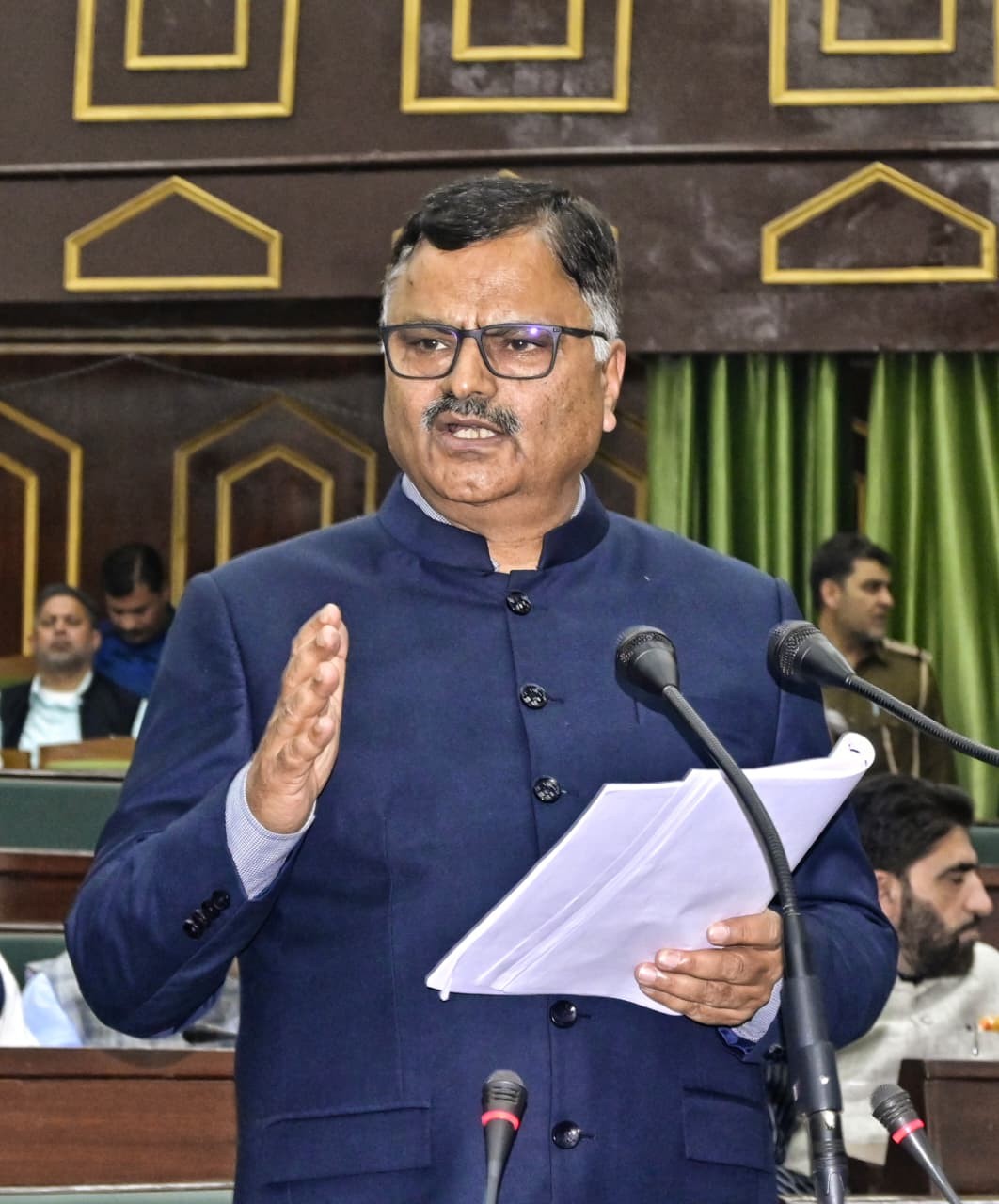
The grants were passed through voice vote after a daylong debate by the Members in the House.
Minister Javed Ahmed Rana concluded the discussion on the Demands for Grants, expressing appreciation for the legislators’ contributions, which will inform future policy decisions and project implementations. He highlighted the government’s commitment to sustainable development, emphasizing the importance of resilient ecosystems and socio-economic empowerment for tribal communities in Jammu & Kashmir. Rana detailed the Forest, Ecology & Environment Department’s initiatives, noting that forests cover nearly half of Jammu & Kashmir and are vital for the region’s ecology. For the fiscal year 2026–27, an allocation of ₹242 crore has been proposed for conservation efforts. He reported significant progress in forest management, including the installation of 1.85 lakh boundary pillars and the digitization of forest boundaries. The ‘Ek Ped Maa Ke Naam’ initiative aims to plant one crore saplings, with 71.77 lakh already planted. Wetland conservation remains a priority, with 260 wetlands mapped and efforts to revive Wular Lake benefiting local fishermen. Wildlife conservation measures have expanded to cover 11.5% of the region, with substantial compensation provided for human-wildlife conflicts. The region has also seen improvements in air quality, with significant reductions in PM10 levels.
In the Public Health Engineering sector, Rana emphasized the government’s commitment to providing drinking water to every rural household through the Jal Jeevan Mission, with a proposed Capex budget of ₹1561.9 crore for 2026–27. He reported that 15.64 lakh households have received tap water, with ongoing projects aimed at universal access. Water quality monitoring is a key focus, with numerous tests conducted to ensure safety. The Irrigation & Flood Control sector will see a significant budget increase to ₹996 crore for 2026–27, aimed at enhancing irrigation infrastructure and flood management. Major projects, including the Shahpur Kandi Dam and Tawi Barrage, are nearing completion, and flood-carrying capacity improvements on the River Jhelum have been made. Rana also addressed the Tribal Affairs Department’s focus on inclusive development for tribal communities, emphasizing education, economic empowerment, and infrastructure support. The government aims to bridge developmental gaps and ensure access to essential services for these populations. Overall, the government’s initiatives reflect a strong commitment to ecological security, sustainable resource management, and the socio-economic upliftment of marginalized communities in Jammu & Kashmir.