
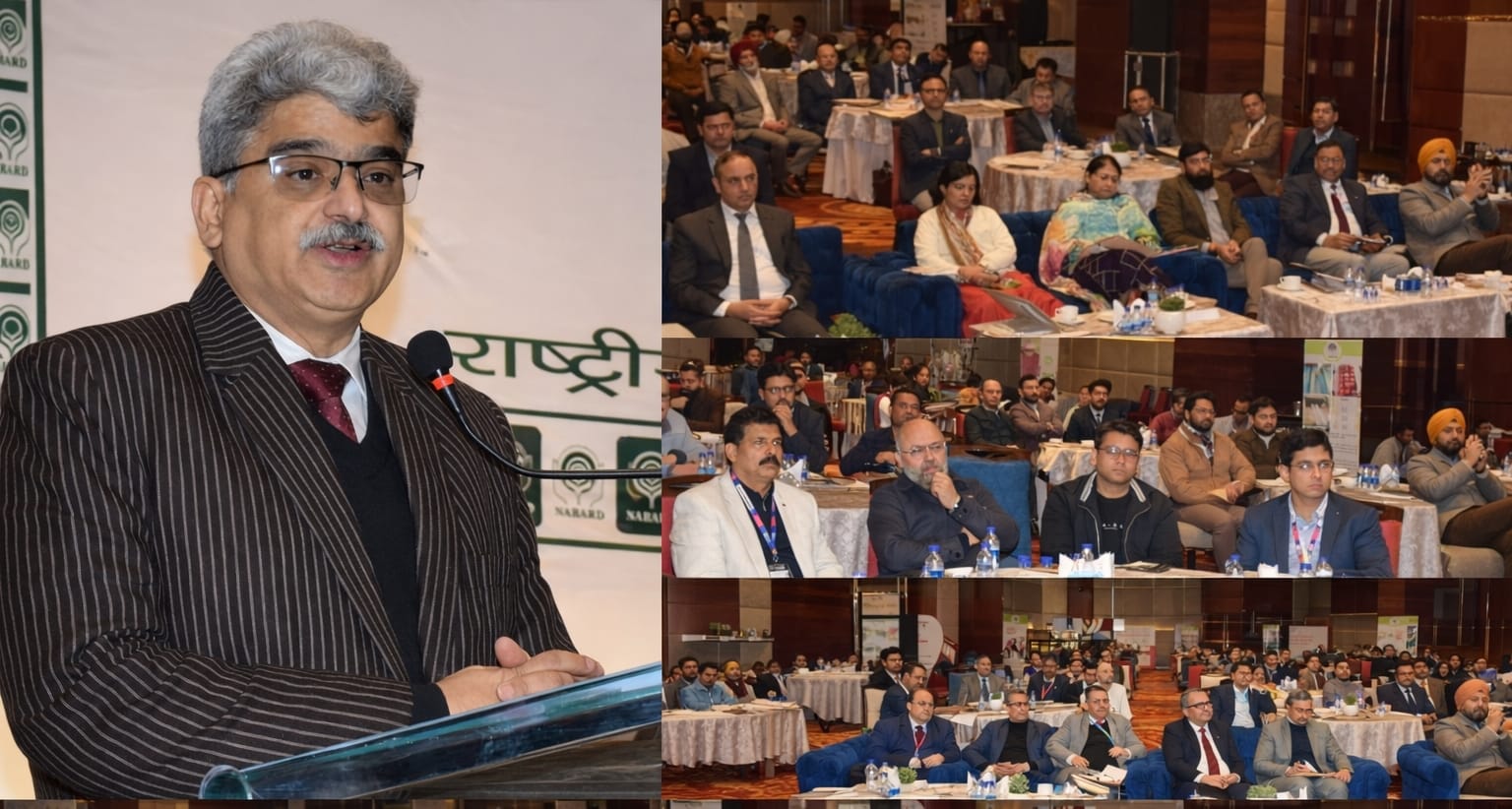
Jammu: The National Bank for Agriculture and Rural Development (NABARD) has estimated a credit potential of ₹49,795.58 crore under Priority Sector for the Union Territory of Jammu and Kashmir for 2026-27.
Chief Secretary Atal Dulloo Tuesday released the focus paper during the Credit Seminar organised by NABARD.
The seminar provided a forum for the policymakers, bankers and other key stakeholders to deliberate on strategies aimed at promoting sustainable and inclusive development in the region.
Addressing the gathering Chief Secretary expressed satisfaction with NABARD’s launch of the focus paper themed “Last Mile Credit Inclusion: Reaching the Unreached.” He highlighted the Potential Linked Plan (PLP) as a vital tool for guiding credit flow and development priorities, emphasizing the importance of universal coverage of Kisan Credit Cards (KCC) to ensure timely and adequate credit. The Chief Secretary acknowledged the Rural Infrastructure Development Fund (RIDF) for its role in enhancing infrastructure. He advocated for a transition from subsistence to commercially viable agriculture, urging a greater emphasis on infrastructure, processing, value addition, and term lending, particularly for niche crops like medicinal and aromatic plants. The Chief Secretary called for an integrated approach involving universities, banks, and line departments, while also stressing the importance of supporting Self-Help Groups (SHGs) and emerging entrepreneurs, particularly “LakhpatiDidis,” through credit. He noted the success of Mission YUVA and the need for skill-based lending, promotion of homestays to decentralize tourism, and advancements in technology and traceability in handicrafts. He identified the ULI initiative as a potential game changer for Jammu and Kashmir. The focus paper outlines sector-specific credit projections, emphasizing agriculture, allied sectors, Micro, Small, and Medium Enterprises (MSMEs), and rural infrastructure. It aims to enhance agricultural credit flow, strengthen Farmer Producer Organizations (FPOs), and improve productivity in horticulture crops like apples and saffron. Additionally, it promotes handloom and handicrafts through value addition and structured marketing support, including Geographic Indication (GI) registration. Vikas Mittal, General Manager and Officer-in-Charge of NABARD, reiterated the organization’s commitment to strengthening rural credit flow and supporting agriculture, MSMEs, and rural infrastructure in Jammu and Kashmir. He emphasized NABARD’s role in collaborative planning and targeted interventions to unlock the region’s economic potential. NABARD is actively driving inclusive development in Jammu and Kashmir through various initiatives, including credit planning, agricultural modernization, digital traceability projects, and value chain support for FPOs. The organization has made significant investments in rural infrastructure through RIDF, launched a Rural Business Incubation Centre, supported GI tagging of local products, and expanded financial inclusion efforts through micro ATMs and literacy camps. Exhibition stalls showcasing NABARD’s initiatives aligned with the seminar theme were part of the program. In his vote of thanks, Manohar Lal, General Manager of NABARD, reaffirmed the organization’s commitment to collaborating with partners to translate projected credit potential into sustainable development outcomes across Jammu and Kashmir.