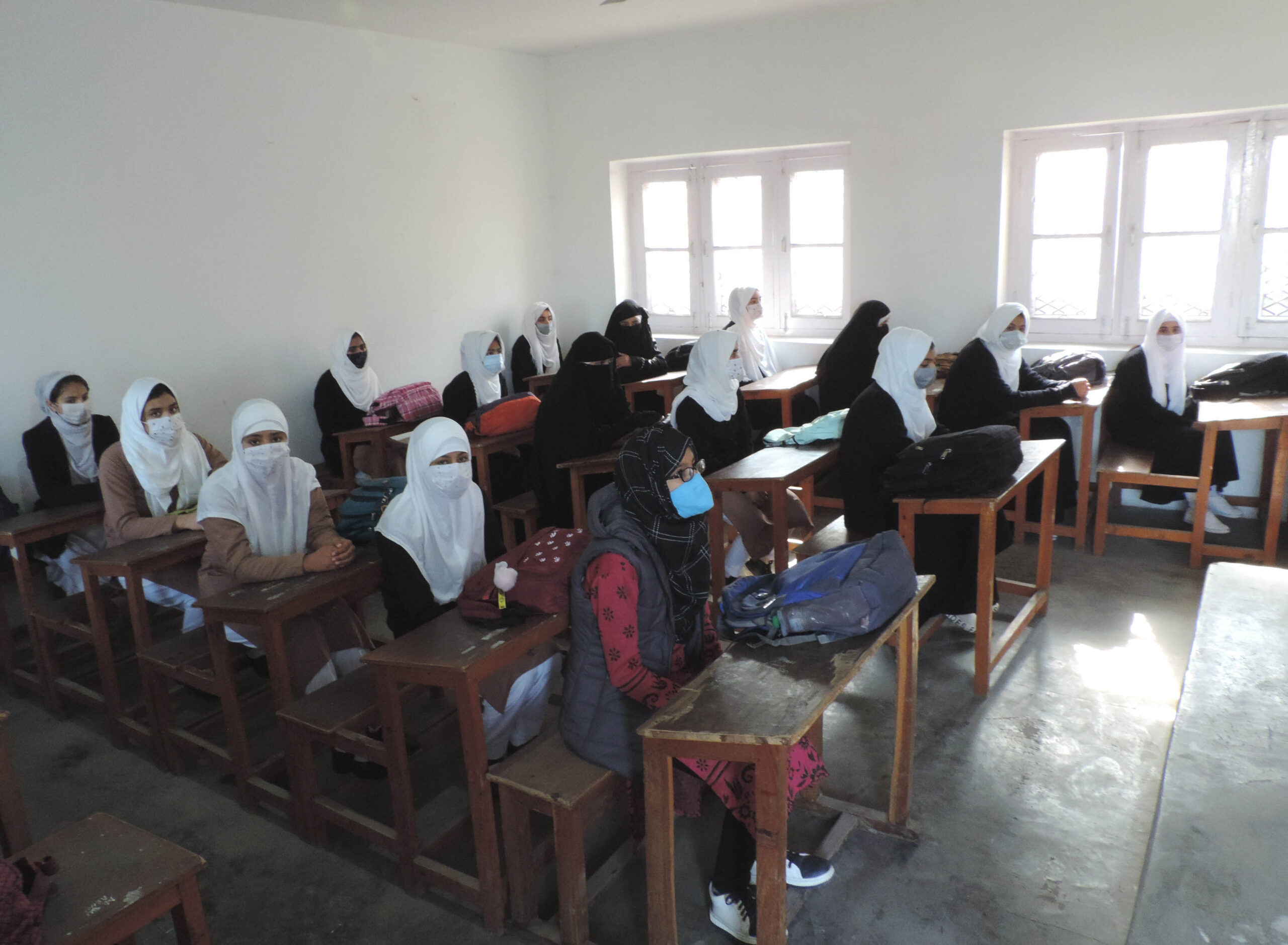
“It takes a big heart to help shape little minds.”
A teacher is more than a job title. It is someone who takes up the responsibility of being the very first guide to a child whose opinions of this world will be greatly impacted by his teacher, this is the same person who takes this child in their comforting presence and hold their tiny hands and opens the door to a world they have yet to know of. In Kashmir, where life is often touched by conflict, a teacher can be the one steady presence that gives children hope. A teacher does not just teach math or language, they teach life and everything that it brings along, patience, courage, and the belief that tomorrow can be better. When a teacher steps into a classroom, they carry more than books and lesson plans. They carry the dreams of families who want their children to have a future. They become counselors when students are anxious, protectors when they feel unsafe, and
motivators when despair threatens to crush ambition. Courts have recognized this role too. In Avinash Nagra v. Navodaya Vidyalaya Samiti (1997), the Supreme Court said that a teacher must be a moral compass, someone students can look up to even outside school. That is not a small expectation. It means society trusts teachers with its most vulnerable members. A teacher is more than a person who delivers lessons. A teacher is the one who introduces a child to the world, gives direction to curiosity, and builds a bridge to the future. In Kashmir, this role carries a heavier weight. Here, education is not just about books. It is about resilience in the face of uncertainty, about giving children a sense of normalcy when the world outside is unstable.
Teachers in Kashmir are carrying a burden far heavier than chalk and lesson plans. Many work on temporary contracts under schemes like ReT and SSA, some without a salary for months. Imagine standing in front of a classroom, telling students to dream big, while your own family struggles for basic needs because your wages are stuck in bureaucratic files. It is not just financial stress, it is humiliation. Many teachers travel miles through snow and roadblocks just to make sure schools stay open. Others teach in buildings with broken windows, no heating, and no internet. After 2019, when long internet shutdowns cut students off from online classes, teachers had to get creative walking to students’ homes, teaching in small groups, writing notes by hand because education could not wait for politics to calm down. In Kashmir, where education has faced disruptions from curfews, internet shutdowns, and political uncertainty, teachers have often worked without pay for months, walking to schools in harsh winters, just to keep learning alive. That quiet dedication is what holds the education system together. The everyday struggles of teachers go beyond paperwork and salaries. Schools in rural Kashmir often lack heating, internet, and basic infrastructure. After 2019, when months-long internet shutdowns cut students off from online education, teachers resorted to walking
from house to house, conducting classes in small groups, and writing lessons by hand to ensure children did not lose hope. That dedication is the real spirit of teaching, but it comes at a personal cost that is financial, emotional, and physical. When the State fails to value teachers, it sends a dangerous message to children that the people entrusted with their future are disposable. Teachers cannot inspire respect for education if they are themselves disrespected. If we want students to believe in learning, we must first give teachers dignity. A teacher Is therefore not just an employee but a builder of futures. Their respect and dignity are tied to the dignity of society itself. If we neglect our teachers, we neglect our children, and we neglect tomorrow. Legally, a teacher can be a government servant, a contractual employee under schemes like Rehbar-e-Taleem (ReT) or Sarva Shiksha Abhiyan (SSA), or a private school staff member. Their rights and responsibilities are shaped by service rules and education policies. Courts have repeatedly acknowledged the special status of teachers. In Avinash Nagra v. Navodaya Vidyalaya Samiti (1997), the Supreme Court held that a teacher is not just a worker but a moral guide, someone society trusts to set an example both inside and outside the classroom. Despite this recognition, the reality for many teachers in Kashmir is far from dignified. ReT and SSA teachers often work without salaries for months. Some have waited years for regularization of service.
“Teachers in Kashmir are the foundation of society’s future, offering hope and consistency amidst challenges. On Teacher’s Day, we must honor their commitment through action and support, not just words, to strengthen our community.”
Private school teachers earn as little as rupees 4,000 to 9,000 a month, without provident fund or job security. Delays in pay are not just an administrative inconvenience they are a form of silent punishment that crushes morale. Again I want to quote here the High Court judgments in Mohammad Khalil Shah v. State of J&K (2021), the High Court directed the government to pay delayed leave salary with interest, stating clearly that employees cannot be made to suffer because of bureaucratic delay. Today on the fifth of September I am writing this piece only to convey the real importance of this day because, Teacher’s Day doesn’t not mean just post polite tributes on social media and call it gratitude. Teachers in this region have kept classrooms alive through curfews, pandemics, and pay cuts. They have turned living rooms into schools, carried books on foot across villages, and taught children under trees when classrooms were locked. Celebrating Teacher’s Day should mean more than speeches and flowers. It should mean paying every teacher on time. It should mean ending the uncertainty of contractual appointments and giving them the job security they deserve. It should mean giving private school teachers wages they can live on. Courts have spoken, time and again, reminding the State that teachers are not expendable; the Supreme Court said teachers are role models. How can they inspire students if they are humiliated with late salaries and endless verification processes? A society that forgets its teachers forgets its future. This Teacher’s Day must be a reminder that education in Kashmir is held together by the dedication of underpaid, overworked teachers who still show up every morning. The least we can do is show them the respect they have already earned and that too not in mere words, but in justice. They pay an emotional cost. When salaries are withheld or jobs are kept temporary for years, it sends a message that’s teachers are disposable. That message is perceived by children too. If the system does not value the very people who light the lamp of education, why should students believe in education at all?
Teachers are not asking for luxury. They are asking for the basics: dignity,timely pay, clear service rules, and respect. Without that, we risk breaking the very backbone of education in Kashmir. On This Day, they need more than polite speeches and symbolic flowers. Real respect means clearing salary backlogs, regularizing long-serving contractual teachers, and creating legal protections for private school staff. It means setting up fast grievance redress mechanisms so teachers are not forced into courtrooms for every small right. It means giving teachers the freedom and resources to teach effectively, not burying them
under endless verification files. Teacher’s Day is not just about remembering Dr. S. Radhakrishnan’s words. It is about honoring the people who keep classrooms alive even in the darkest times. Teachers are the quiet architects of hope in a place where hope is often scarce. They hold the line when everything else falls apart, reminding children that learning is still worth chasing. On this Teacher’s Day, let us not just thank them with words but stand with them in action. Let us promise them what they have already given us every single day: consistency, commitment, and care. Their work is not charity, it is the foundation on which every dream in Kashmir is built. If we want a future that is stronger than the storms around us, we must begin by honoring the hands that shape it — our teachers. If we fail them, we fail the very foundation of our education system. If we respect them, we strengthen not just schools but society itself.Teachers in Kashmir have done their part, again and again, often in silence. This Teacher’s Day is a chance to finally do ours, not just in thoughts but in reformation, action and change. “If you can read this, thank a teacher.”
(The author is a student at Law Department, Kashmir University. The views, opinions and conclusions expressed in this article are those of the author and aren’t necessarily in accord with the views of “Kashmir Horizon”)
Arif Zahoor Lone
[email protected]