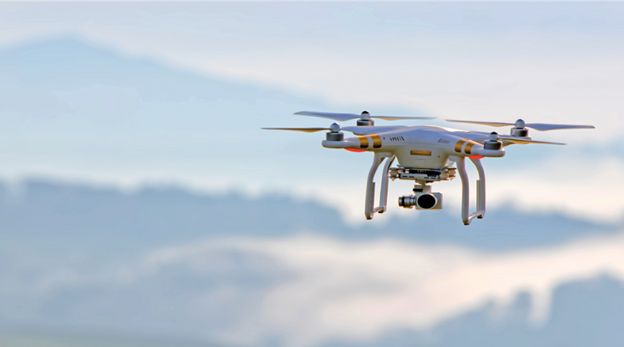
New Delhi: After the strategic success of the ongoing Operation Sindoor, Lieutenant General Sumer Ivan D’Cunha, Director General of the Army Air Defence, said that Pakistan had launched nearly 800 to 1000 drones across the western border over four days, and highlighted their successful neutralisation through coordinated efforts by the Army, Navy, and Air Force.He confirmed that all drones carrying weapons were successfully intercepted, preventing any civilian casualties. In an interview with ANI, he explained how all three services worked together to defend against drone and missile attacks.”..I would say anything between 800 to 1000 across the whole western border in four days. A large number of them were destroyed. One thing for sure is that all the Unmanned Combat Aerial Vehicles [UCAV] which carried a payload, although they intended to harm our civilian population and they were directed towards population centres, we ensured that they did not cause any damage, and I think the proof of the pudding is actually in what we actually saw, that there were no civilian casualties…” Lt Gen D’Cunha told ANI in an exclusive interview.The top Army officer credited Operation Sindoor for its success and praised the joint coordination between the Army, Navy, and Air Force in countering drone and missile threats from Pakistan.Explaining the division of responsibilities among the services, he said, “The role for air defence is shared between the Army, Navy, and Air Force. The Air Force is the primary respondent, but each service has its part. The Army is in charge of the airspace and rear areas within the Tactical Battle Area (TBA), while the Air Force protects important places like major cities and refineries. If we have a strong radar system to detect threats like drones and a well-layered defence setup, we can respond effectively. The first layer could be guns with a range of around three kilometres, then missiles at 10 kilometres, and then you have a leaker, which comes through to be very unfortunate.”Lt Gen D’Cunha described India’s layered air defence system, saying there are multiple levels of protection. The first includes guns with a two-kilometre range, followed by V-SHORAD missiles with a 3.5 km range, the Akash missile system with an 18 km range, and longer-range systems like MR-SAM and S-400.”Whether it’s a gun, a shoulder-fired missile like V-SHORAD, the indigenous Akash system, or the MR-SAM, each weapon operates at a specific altitude. Guns can engage targets up to 1.8 to 2 km, V-SHORAD up to 3.5 km, Akash up to 18 km, MR-SAM around 14 km, and the S-400 can also go up to 18 km. The altitude of the threat helps determine the most suitable weapon system to use. In an automated system like Akash Teer, which is still being rolled out, this process becomes highly efficient. Akash Teer of the Army and the IACCS of the Air Force work together to ensure proper use of resources and timely weapon allocation,” he said.He added that although the S-400 system is operated by the Air Force’s IACCS due to its cost and long range, close coordination now exists between the Army and Air Force through automated systems.When asked about the nature of the drone attacks, Lt Gen D’Cunha said, “Many flew very low to confuse gunners and saturate our radars. These drones were within the range of our guns and were effectively brought down. As they moved higher, into the next engagement zone up to 2 km, they were targeted again. Our jammers and electronic warfare systems also played a role, using techniques like jamming, cyber spoofing, and even cyber takeover to neutralise the threats.”He also praised the indigenous Akashteer system, which plays a key role in coordinating air defence operations. “We have rolled out the Akash system, and in fact, the complete translation of the Air Force’s IACCS (Integrated Air Command and Control System) picture into the Tactical Battle Area is done through Akash Teer. It’s an outstanding system that provides a centralised view of the airspace, clearly identifying enemy targets and passing that information all the way down to the weapon systems on the ground. Akash Teer is fully indigenous and completely integrated.”Akashteer provides a common, real-time air picture to all involved parties (control room, radars and Defence Gun), enabling coordinated air defence operations. It is a system designed to automate detection, tracking and engagement of enemy aircraft, drones and missiles. It integrates various radar systems, sensors and communication technologies into a single operational framework.Akashteer gathers data from multiple sources, processes it and allows for automated, real-time engagement decisions. Akashteer is part of the broader C4ISR (Command, Control, Communications, Computers, Intelligence, Surveillance and Reconnaissance) framework, working in coordination with other systems. The system is vehicle-based, which makes it mobile and easier to handle in a hostile environment.
CM inaugurates three-day Kashmir Marathon Exposition at Polo View

Omar appeals people to participate enthusiastically in Sunday’s marathon Srinagar| Oct, 10:Chief Minister Omar Abdullah Thursday inaugurated the three-day exposition...
Read moreDetails