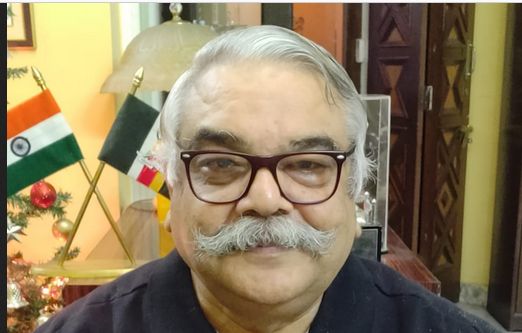
Jammu: In the wake of the growing clarity on Pakistan’s involvement in the recent Pahalgam massacre, Brigadier Anil Gupta, a distinguished security and strategic analyst, has strongly advocated for India to expedite the development of key hydroelectric projects on the Chenab River as a strategic response to Pakistan’s actions.
The projects, Ratle, Pakal Dul, and Bursar, all located in Kishtwar District, Jammu and Kashmir, are critical to India’s energy security and its ability to exercise greater control over the region’s water resources.
While Pakistan’s role in fueling violence in Kashmir becomes clearer by the day, Brig Gupta pointed out that some political leaders continue to plead for leniency towards Pakistan and question the suspension of the Indus Water Treaty (IWT).
“It’s time to shift gears. The enemy must be hit where it hurts most—water is Pakistan’s vulnerability, particularly in the elite-controlled regions of Punjab and Sindh,” said Brig Gupta.
He emphasized that the suspension of the IWT presents India with an opportunity to strengthen its own infrastructure and provide greater benefits to its population and farmers, while simultaneously punishing Pakistan for its disruptive actions in Kashmir.
The Ratle Hydroelectric Project, with a capacity of 850 MW, is expected to be completed by May 2026, and Brig Gupta suggested that the project explore the possibility of increasing its pondage to limit the flow of water into Pakistan. Additionally, the Pakal Dul and Bursar projects, located on the Marusudar River (a major tributary of the Chenab), will help regulate water flow during lean months, benefiting both power generation and water management.
With the Pakal Dul project set for completion in 2026 and the Bursar Project scheduled for 2028, Brig Gupta urged for the fast-tracking of these projects to ensure they are completed without further delays.
The strategic benefits of these projects, according to Brig Gupta, extend beyond energy generation. They will provide India with enhanced control over the Chenab waters, helping regulate the flow as a political tool following the suspension of the IWT. Furthermore, they will address water shortages in Jammu and the surrounding regions, improve irrigation and urban water supply, and contribute to the overall economic development of the Kandi region.
“By fast-tracking these projects, India will not only secure its energy future but also reduce carbon emissions and create much-needed jobs,” Brig Gupta added.