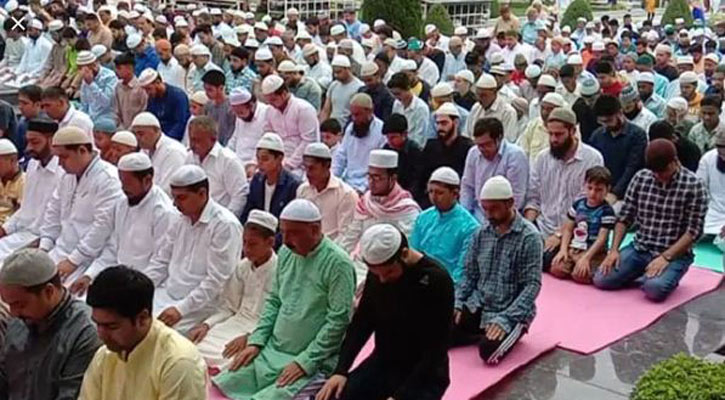
Taraweeh Salah is a special prayer performed by Muslims during the holy month of Ramadan. It is offered after the obligatory Isha prayer and is regarded as an emphasized Sunnah (Sunnah Mu’akkadah). The term Taraweeh is derived from the Arabic root word raha, which means to rest, as worshippers take short breaks between sets of prayers.Taraweeh is not explicitly mentioned in the Holy Quran as a separate prayer, but its practice is rooted in the teachings of the Prophet Muhammad (ﷺ), as recorded in various Hadith collections. Over time, a scholarly debate has emerged regarding the number of rak‘ahs (units of prayer) that should be performed—whether 8, 20, or even more. This article explores the origins, significance, and the controversy surrounding the number of rak‘ahs in Taraweeh Salah.
Taraweeh In The Light Of The Holy Quran: Though the Holy Quran does not explicitly mention Taraweeh as a separate prayer, it encourages night prayers (Qiyam-ul-Layl). Several verses highlight the virtue of standing in prayer at night:
- Surah Al-Muzzammil (73:1-2, 73:20)
“O you who wraps himself [in clothing], arise [to pray] the night, except for a little—half of it, or subtract from it a little“
“Indeed, your Lord knows that you stand [in prayer] almost two-thirds of the night or half of it or a third of it, and so do a group of those with you”
This verse refers to night prayer in general, which includes Qiyam-ul-Layl and later came to be associated with Taraweeh during Ramadan.
- Surah Al-Isra (17:79) “And rise from your sleep for prayer in the night as an additional prayer for you,it is expected that your Lord will raise you to a praised station.”
- Surah Adh-Dhariyat (51:17-18) “They used to sleep but little in the night. And in the hours before dawn, they would seek forgiveness.”
These verses emphasize the importance of night prayer but do not specify the exact number of rak‘ahs.
Taraweeh In The Light Of Hadith: The practice of offering Taraweeh Salah was established by the Prophet Muhammad (ﷺ). Several authentic hadiths provide insight into its origin:
- The Prophet (ﷺ) Prayed Taraweeh In Congregation: According to Sahih al-Bukhari (Hadith 1129), the Prophet (ﷺ) initially led Taraweeh prayer in congregation for a few nights, but then he stopped out of fear that it might become obligatory upon his followers: “The Prophet (ﷺ) prayed in the mosque one night, and people prayed behind him. Then he prayed the next night, and more people gathered. On the third or fourth night, they gathered again, but the Prophet (ﷺ) did not come out to lead the prayer. In the morning, he said: ‘I feared that it would become obligatory upon you, and you would not be able to bear it.”
This hadith establishes that Taraweeh was performed in congregation during the Prophet’s time, but he discontinued leading it publicly to avoid hardship on the ummah.
- The Practice Of Umar Ibn Al-Khattab (RA): During the caliphate of Umar ibn al-Khattab (RA), he revived the congregational Taraweeh prayer and appointed Ubayy ibn Ka‘b (RA) as the imam. This is recorded in Sahih al-Bukhari (Hadith 2010), “Umar ibn al-Khattab (RA) came to the mosque and saw people praying separately. He said, ‘It would be better if they prayed together behind one imam.’ So he appointed Ubayy ibn Ka‘b to lead them, and they prayed twenty rak‘ahs.” This hadith serves as a strong basis for the practice of 20 rak‘ahs in Taraweeh.
“The majority of scholars consider 20 rak‘ahs as the established Sunnah based on the practice of Umar ibn al-Khattab (RA), but those who pray 8 rak‘ahs also follow a valid opinion. Ultimately, the focus should be on devotion and sincerity in worship rather than the number of rak‘ahs. Whether one prays 8 or 20, the essence of Taraweeh remains the same seeking Allah’s mercy and blessings in the sacred month of Ramadan.”
The Controversy; 8 vs. 20 Rak‘ahs: A significant debate exists among scholars regarding the number of rak‘ahs in Taraweeh.Some scholars argue that Taraweeh consists of 8 rak‘ahs based on the hadith of Aisha (RA) recorded in Sahih al-Bukhari (Hadith 1147): “The Prophet (ﷺ) never prayed more than eleven rak‘ahs (including Witr) in Ramadan or any other month. He used to pray four rak‘ahs, and do not ask about their beauty and length, then he would pray four rak‘ahs, and do not ask about their beauty and length, then he would pray three (Witr).” Those who follow this opinion argue that since the Prophet (ﷺ) himself prayed 8 rak‘ahs, it should be considered the Sunnah. And Many scholars argue that Taraweeh consists of 20 rak‘ahs based on the practice of Umar ibn al-Khattab (RA) and the consensus of the Sahabah (Companions). The hadith from Muwatta Imam Malik states: “The people used to stand in the night in Ramadan for twenty-three rak‘ahs (including Witr) during the time of Umar ibn al-Khattab (RA)”
Additionally, the Hadith of Ibn Abbas (RA) in Sunan al-Bayhaqi reports that the Prophet (ﷺ) himself prayed 20 rak‘ahs.
Which Number Is Correct? Islamic scholars provide different interpretations: 8 rak‘ahs is supported by the hadith of Aisha (RA) and is considered closer to the Prophet’s personal practice. 20 rak‘ahs is supported by the consensus of the Sahabah and the practice of Umar ibn al-Khattab (RA), making it a strong Sunnah. More than 20 rak‘ahs is also permissible, as some scholars mention 36 rak‘ahs in Madinah based on the practice of early generations. Taraweeh Salah is an important aspect of Ramadan, encouraging spiritual connection and devotion. While there is a debate on whether 8 or 20 rak‘ahs should be offered, both opinions have strong evidence from hadith and the practices of the righteous predecessors. The majority of scholars consider 20 rak‘ahs as the established Sunnah based on the practice of Umar ibn al-Khattab (RA), but those who pray 8 rak‘ahs also follow a valid opinion. Ultimately, the focus should be on devotion and sincerity in worship rather than the number of rak‘ahs. Whether one prays 8 or 20, the essence of Taraweeh remains the same seeking Allah’s mercy and blessings in the sacred month of Ramadan.
(The author a lawyer by profession is a freelancer. The views, opinions and conclusions expressed in this article are those of the author and aren’t necessarily in accord with the views of “Kashmir Horizon”)
Sajad Paul