“Selective implementation has raised concerns about the government’s commitment to its pre-election promises, especially when a more inclusive approach could have reduced the burden of the hiked power tariff on all categories of consumers, not just the AAY category.”
Freebies for basic social services like power, ration and public transport is a new experience for both the political leaders in power and as well as administrators in Jammu & Kashmir. Chief Minister Omar Abdullah may take pride in embarking on this new experience but eye watchers in Kashmir won’t like to draw any conclusion on the outcome of the politics of freebies for one or the other reason in Jammu & Kashmir. Interesting now would be the implementation of Chief Minister’s announcements on 200 units’ free power and 10 kilograms free ration to people of Antyodaya Anna Yojana (AAY) category besides free bus rides for women in Government-owned passenger services. Already the decision to restrict 200 units free power facility to only people of Antyodaya Anna Yojana (AAY) category in metered areas has triggered criticism from people of other low income groups particularly one called “Below The Poverty Line”-BPL Category. This selective implementation has raised concerns about Chief Minister’s commitment on his party’s pre-election promises. A bigger public perception about announcement of free power in Jammu & Kashmir is that a more inclusive approach could have reduced the burden of the hiked power tariff on all categories of consumers, not just the AAY category. Given the fact that Chief Minister had himself promised roll back of the power tariff rates hiked unprecedentedly before the assembly elections it would been better for the elected Government to provide relief across the broad by reducing the existing power tariff rates. Fact remains that 200 units free power just only for people of Antyodaya Anna Yojana (AAY) category the lowest income groups brings relief to just 1.5% of the total population. In the aftermath of announcement of freebies during the ongoing budget session of the assembly the people belonging to the Below Poverty Line (BPL) category and even the general category are disillusioned with Chief Minister’s decision to restrict the freebies to AAY beneficiaries only. The ruling party’s pre-election commitments clearly stated that 200 units of free power and 10 kg of free ration would be provided to all, irrespective of their income slabs. A virtual backtracking on this commitment has resulted in widespread discontent among the people. Another major pre-election promise of Chief Minister Omar Abdullah was the removal of smart meters on return to power, a demand strongly voiced by the people across Jammu & Kashmir during the campaigning of last year’s assembly elections by political parties. People are now disappointed to see Chief Minister insisting on installation of smart meters in non-metered areas and this stance of Chief Minister obviously going in conflict with his pre-election promises erodes the faith of people in the fulfillment of ruling party’s pre-election promises by the newly elected Government.
“The implementation of freebies in basic social services should not be selective or politically motivated but it’s motive should be to provide comprehensive relief to people of all sections of society. Review of the policies on freebies and an approach to extend benefits to people of all classes and categories without any discrimination is the only way to strike a balance between the public trusts and the financial constraints for Chief Minister Omar Abdullah.”
Critics and political rivals of the Chief Minister have come out strongly against the Government with the argument that instead of taking steps to reduce the excessively high power tariff rates imposed before the elections the Government is focusing on enforcing smart meters, which are widely perceived as an additional financial burden on consumers. Notably rhe announcement of free bus rides for women on all government-owned public transport services, including e-buses, from April 1 is another initiative that has received mixed reactions. While it is a welcome step in urban areas, its impact is limited in villages and towns where government-owned public transport is scarce. The disparity in access raises concerns about the effectiveness of this policy in providing widespread benefits to women across the region. The Government has also increased marriage assistance for girls under the AAY category from ₹50,000 to ₹75,000 but this benefit too has not been extended to BPL families, leaving many disappointed. The decision to restrict such social welfare measures to only a specific section of the economically weaker population instead of making them more inclusive has drawn criticism from almost all quarters. Surprisingly, Omar Abdullah has remained silent on the promise of providing free electricity by integrating conventional hydropower systems with the PM Suryaghar Bijli Yojna. This again goes in conflict with his pre-election commitment. While people are not opposed to the installation of grid-connected solar systems to generate the required power and eliminate electricity bills, they do object to any government move to make it mandatory for people of all income categories. The implementation of freebies in basic social services should not be selective or politically motivated but it’s motive should be to provide comprehensive relief to people of all sections of society without discrimination. Review of the policies on freebies and an approach to extend benefits to people of all classes and categories without any discrimination is the only way to strike a balance between the public trust and the financial constraints for Chief Minister Omar Abdullah.
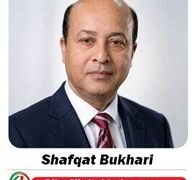
Shafqat Bukhari