Significant increase in budget allocation: ₹1,18,390 Crore for 2024-25
Power sector challenges addressed with ₹9,400 Crore allocation
Major investment in infra: ₹3,983 crore for roads, bridges
Education and health sectors benefit from ₹3,192 crore allocation
Local governance strengthened with ₹1,808 crore for dev works
Social security and women empowerment receive ₹1,430 Cr support
Tourism dev, environmental projects get ₹919 Crallocation
Technological innovations , infras projects highlighted in budget
Agricultural sector enhanced with ₹1,021 Cr through holistic dev prog
Strategic infra projects: solar power and smart city initiatives funded
Spl grants and employment schemes to boost local economy and dev
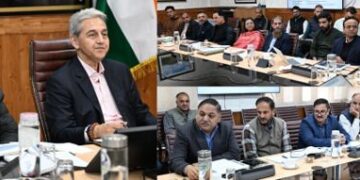
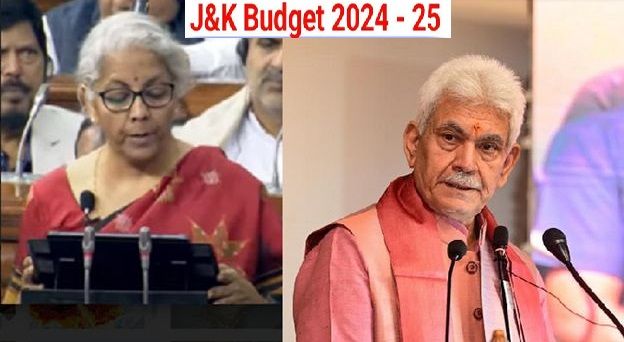
Srinagar: The Parliament has approved the budget for Jammu & Kashmir for the fiscal year 2024-25, with an allocation of ₹1,18,390 crore. The budget was passed in the Lok Sabha on Tuesday and subsequently approved by the Rajya Sabha on Wednesday. The budget includes ₹81,486 crore for revenue expenditure and ₹36,904 crore for capital expenditure.
This budget allocation represents an increase of ₹30,889 crore over the previous year’s figures, made possible by special financial support from the Central Government.
The additional funding was necessary due to ongoing challenges in the power sector, including high Aggregate Technical & Commercial (ATC) losses and low tariffs in Jammu and Kashmir. The J&K government had previously taken on off-budget borrowings of around ₹28,000 crore to address accumulated power sector dues.
To address these financial challenges, the J&K Finance Department began an initiative a year ago to incorporate these off-budget borrowings into the official budget. A thorough analysis of the fiscal situation in J&K was conducted, focusing on legacy issues such as high staff numbers, a low revenue base, and significant debt.
As a result, the J&K government managed to increase its own revenues to over ₹20,362 crore in 2023-24 through improved GST compliance, dealer registrations, and transparent excise auctions. Additionally, efforts to improve metering and collection efficiency boosted non-tax revenues from ₹5,148 crore in 2022-23 to ₹6,500 crore in 2023-24. The receipt of Central Sponsored Schemes (CSS) funds also rose from ₹6,400 crore in 2022-23 to ₹10,300 crore in 2023-24.
In 2023-24, the J&K government enforced strict borrowing limits and reduced the reliance on overdrafts and Hundis. With close monitoring of public debt, the government successfully reduced off-budget borrowings. Non-priority expenditures were also curtailed through austerity measures and biometric verification of beneficiaries. Notably, for the first time in 77 years, J&K contributed to the contingency funds managed by the Reserve Bank of India (RBI).
The fiscal reforms were spearheaded by Lieutenant Governor Manoj Sinha, Chief Secretary Atal Dulloo, and Principal Secretary Finance Santosh Vaidya.
Key meetings were held in June and July 2024 with the Ministry of Home Affairs and the Ministry of Finance to review J&K’s fiscal performance. Both the Union Home Minister and the Union Finance Minister personally assessed the fiscal management of J&K. In recognition of the challenges faced and the reforms undertaken by the J&K government, the Central Government has approved a special financial package of ₹17,000 crore for Jammu and Kashmir. This package will reduce the fiscal deficit to GDP ratio of J&K to 3.0% in the financial year 2024-25. The Union Government will also cover the salary, pension, and other costs of the Jammu and Kashmir Police, with ₹12,000 crore allocated for this purpose in the Union budget. Additionally, a special grant of ₹5,000 crore is being provided to J&K. As part of the special package, the J&K government has committed to timely repayment of its dues to J&K Bank, having already repaid about ₹4,600 crore. This repayment will alleviate fiscal stress on the government, providing additional fiscal space to address the developmental needs and aspirations of the people. It will also enable the J&K police to invest in modern weapons, police housing, and infrastructure.
Major Outlays under Budget 2024-25: The budget for Jammu and Kashmir in 2024-25 includes several significant allocations aimed at various sectors and development projects: A major allocation of ₹9,400 crore is designated for subsidies and budgetary support related to power purchases from the national grid and agreements with power generation companies. This investment is crucial for ensuring a reliable energy supply. The budget also earmarks ₹3,983 crore for the construction of roads and bridges under various schemes such as PMGSY, CRIF, NABARD loan schemes, and the Bridge scheme, enhancing connectivity and infrastructure. For education, ₹1,875 crore is allocated to rejuvenate school infrastructure and services. This includes funding for the Samagra Shiksha Abhiyan (SSA), career counseling services, and the establishment of modern schools under the PM SHRI scheme, aimed at improving the quality of education. Strengthening decentralized governance receives a significant boost with ₹1,808 crore set aside for local area development works for Panchayati Raj Institutions (PRIs), Urban Local Bodies (ULBs), Block Development Councils (BDCs), and District Development Councils (DDCs). A provision of ₹1,714 crore is made for improving tap-water connectivity in rural areas through the Jal Jeevan Mission, addressing water access issues in underserved areas. The budget also allocates ₹1,484 crore for the completion of Smart City projects in Srinagar and Jammu, as well as for infrastructure projects under the Jhelum Tawi Flood Recovery Project (JTFRP). This includes the construction of sewerage treatment plants in urban areas and the development of new townships for housing. Comprehensive social security coverage is supported with ₹1,430 crore for assistance schemes for the elderly, widows, and disabled individuals, as well as women empowerment initiatives such as the Ladli Beti and Marriage Assistance schemes. The health sector will see an investment of ₹1,317 crore aimed at strengthening infrastructure and services under the National Health Mission mechanism, improving healthcare delivery across the region. For housing the poor, ₹1,104 crore is allocated for constructing homes for houseless families in rural areas under the PM Awas Yojana-Grameen. A sum of ₹1,068 crore is set aside for various provisions including salaries, food grains, cash assistance for Kashmiri migrants, and the construction of transit accommodation for migrant employees.Agriculture and allied sectors will receive ₹1,021 crore through the Holistic Agriculture Development Programme (HADP), including provisions for the J&K Comprehensive Investment Plan (JKCIP), cold storage development, and high-density plantations. Industrial development is supported with ₹923 crore for upgrading industrial estates, providing GST refund incentives, and promoting trade and investment through various events organized by JKTPO.Hydroelectric projects at Ratle, Kwar, and Kiru will benefit from ₹776 crore in equity support, providing a stable revenue source and cheaper power. Universal health insurance coverage for all families in Jammu and Kashmir is provided with an allocation of ₹586 crore.An additional ₹500 crore is dedicated to supplying drugs, machinery, and equipment for health institutions. Infrastructure upgrades for colleges and universities and the rollout of the National Education Policy are supported with ₹475 crore.Tourism development receives ₹518 crore for promoting tourism, developing new destinations and circuits, constructing ropeways, conducting the Shri Amarnath Ji Yatra, and supporting film festivals and tourism promotion policies. Sanitation and waste disposal improvements are funded with ₹445 crore, including initiatives to achieve ODF+ status in rural areas. Flood management projects for the Jhelum River receive ₹390 crore to address flood risks and mitigation efforts. Schemes for self-employment, startups, seed capital funds, and support for self-help groups are allocated ₹405 crore to promote livelihood generation. Security-related infrastructure, including police housing colonies, border bunkers, and CCTV installations, is supported with ₹179 crore. The installation of solar rooftops and solar pumps is funded with ₹150 crore, promoting renewable energy solutions. Sports infrastructure, heritage preservation, festival promotion, and tribal welfare initiatives receive a combined allocation of ₹335 crore. Revitalization of Regional Rural Banks (RRBs) and Cooperative Banks is supported with ₹100 crore in capital funding. Finally, ₹401 crore is allocated for the development of Dal Lake, afforestation, wildlife management, and the preservation of protected areas. The budget for Jammu & Kashmir in 2024-25 includes provisions for ongoing initiatives in infrastructure development, sustainable agriculture, the establishment of new industrial estates, Panchayati Raj Institution (PRI) level works, employment generation, tourism development, and social inclusion.
Major Outlays under Budget 2024-25: The 2024-25 budget includes a substantial allocation of ₹9,400 crore for subsidies and budgetary support to facilitate the purchase of power from the national grid and for power purchase agreements with power generation companies. This funding is essential to ensure a steady and reliable energy supply. A significant portion of the budget, ₹3,983 crore, is allocated for the construction of roads and bridges under various schemes, including PMGSY, CRIF, NABARD loan schemes, and the Bridge scheme. This investment will enhance infrastructure and connectivity throughout the region. Education infrastructure and services are set to benefit from an allocation of ₹1,875 crore. This funding supports the Samagra Shiksha Abhiyan (SSA), career counseling services, and the establishment of modern schools under the PM SHRI scheme, all aimed at improving educational quality. To bolster decentralized governance, ₹1,808 crore is designated for local area development works for Panchayati Raj Institutions (PRIs), Urban Local Bodies (ULBs), Block Development Councils (BDCs), and District Development Councils (DDCs). This allocation will strengthen governance at the grassroots level. The budget also provides ₹1,714 crore for enhancing tap-water connectivity in rural areas through the Jal Jeevan Mission, addressing critical water access issues in underserved regions. An investment of ₹1,484 crore is made for the completion of Smart City projects in Srinagar and Jammu, as well as for infrastructure projects under the Jhelum Tawi Flood Recovery Project (JTFRP). This includes the construction of sewerage treatment plants in urban areas and the development of new townships for housing. Comprehensive social security coverage is supported with ₹1,430 crore allocated for assistance schemes for the elderly, widows, and disabled individuals, as well as for women empowerment initiatives such as the Ladli Beti and Marriage Assistance schemes. In the health sector, ₹1,317 crore is allocated for strengthening infrastructure and services under the National Health Mission mechanism, aiming to improve healthcare delivery across Jammu and Kashmir. For housing the poor, ₹1,104 crore is set aside for the construction of homes for houseless families in rural areas under the PM Awas Yojana-Grameen scheme. An allocation of ₹1,068 crore is made for various provisions, including salaries, food grains, cash assistance for Kashmiri migrants, and the construction of transit accommodation for migrant employees. Agriculture and allied sectors will receive ₹1,021 crore through the Holistic Agriculture Development Programme (HADP), which includes provisions for the J&K Comprehensive Investment Plan (JKCIP), cold storage development, and high-density plantations. Industrial development is supported with ₹923 crore for upgrading industrial estates, providing GST refund incentives, and promoting trade and investment through events organized by JKTPO. Hydroelectric projects at Ratle, Kwar, and Kiru will benefit from ₹776 crore in equity support, providing a stable revenue source and cheaper power. Security-related infrastructure, including police housing colonies, border bunkers, and CCTV installations, is supported with ₹179 crore. The installation of solar rooftops and solar pumps is funded with ₹150 crore, promoting renewable energy solutions. Creation of sports infrastructure, heritage preservation, festival promotion, and tribal welfare initiatives receive a combined allocation of ₹335 crore, including support for tribal hostels, milk villages, and nomad shelters. Revitalization of Regional Rural Banks (RRBs) and Cooperative Banks is supported with ₹100 crore in capital funding. Finally, ₹401 crore is allocated for the development of Dal Lake, afforestation, wildlife management, and the preservation of protected areas, ensuring environmental conservation and ecological balance.
Main budget highlights 2024-25
The budget for 2024-25 includes a significant investment of USD 100 million through a loan from the International Fund for Agricultural Development (IFAD) for the Competitiveness Improvement of Agriculture and Allied Sectors Project (JKCIP) in Jammu and Kashmir. This initiative aims to boost agricultural productivity and sustainability.
Under the Holistic Agriculture Development Programme (HADP), 29 approved projects will be implemented, totaling ₹5,013 crore over five years, to transform the agricultural landscape in the region. Additionally, 25,000 metric tons of Controlled Atmosphere (CA) storage capacity will be added to support efficient grain storage.
A Chrysanthemum theme park will be developed at Cheshmashahi, Srinagar, enhancing the region’s horticultural tourism. Furthermore, 60,000 backyard poultry units will be established in rural areas to support local livelihoods.
To create employment opportunities, especially in rural areas, micro food processing units will be set up. Construction of six new grain storage units in districts with insufficient storage facilities will be undertaken under the “World’s Largest Grain Storage” scheme.
The budget also plans to form 12,000 additional Self Help Groups (SHGs) and construct 80,000 houses under the Pradhan Mantri Awas Yojana-Gramin (PMAY-G). An area of 26,000 hectares will be covered under the Integrated Watershed Management Programme (IWMP).
Tourism development will see the introduction of 12 new off-beat tourist destinations, including Keran as a border tourist village and Tosamaidan and Sitharan as new circuits. The revival and restoration of 75 identified heritage and cultural sites will be undertaken, with the establishment of eight cultural centers.
The budget targets the development of 46 estates to support the “Made in Jammu and Kashmir” initiative. The Jammu and Kashmir Rural Employment Generation Programme (J&K REGP) aims to set up 1,372 units during 2024-25, and a new Start-up Policy will be introduced to foster entrepreneurship.
Healthcare improvements include making two cancer institutes in Jammu and Srinagar fully operational, enhancing DNB seats to 400, and creating ABHA IDs for 1.35 crore people. Comprehensive health screening for hypertension and diabetes for those over 30 years old will be conducted.
AIIMS Awantipora is set to be functional by March 2025, and a new Nursing College will be established in Handwara. The region aims to attain a TB-free status in all remaining districts and establish 2,176 new kindergartens.
In education, 18,499 schools will receive sports equipment, 2,584 schools will be equipped with ICT labs and smart classrooms, and 43 robotic labs and 30 virtual reality labs will be established. Science centers will be set up in 100 schools, and vocational education will be introduced in 554 new schools.
The budget includes organizing 20 national sports events and placement drives for 1,000 graduates in collaboration with major businesses and industries. A new initiative to promote enterprises and self-employment aims to generate over 5 lakh job opportunities and expand investments through credit support.
New age courses will be introduced in 10 Industrial Training Institutes, and outreach and counseling activities will be conducted through Model Career Centers (MCCs). All persons with disabilities will be covered under the Nirmaya Health Insurance Scheme, and 11 Shakti Sadan and four Sakhi Niwas will be established.
Self-employment schemes will target 7,708 women beneficiaries with 1,502 units. Additionally, 80 schools in tribal areas will be transformed into smart schools.
The budget plans an addition of 3,014 MW installed capacity in a phased manner by 2026-27, with a cumulative increase of 10,714.50 million units per annum. Distribution transformer capacity will be augmented by 38,150 KVA, and 14,000 kilometers of dilapidated LT bare conductor will be replaced.
Reliable power supply will be extended to remote areas like Gurez, and 5,000 kilometers of road length will be black-topped during 2024-25. The budget allocates ₹1,000 crore for new road and bridge projects under NABARD loan assistance and ₹1,023.42 crore for 194 new projects under NABARD.
Completion of 60 ongoing bridges and the construction of 4.26 lakh functional household tap connections (FHTCs) are targeted. The Shahpur Kandi Dam project is expected to be commissioned, benefiting Jammu and Kashmir with irrigation water facilities.
The balance work of the Tawi Barrage will be completed, and 197 minor irrigation schemes will be finished, creating irrigation potential for 38,723 hectares. All projects under the Smart City Mission will be completed, and the Western Foreshore Road along Dal Lake, Srinagar, will be constructed.
The budget includes the introduction of 200 e-buses under the PM e-Bus Sewa scheme, development of an Inter Model Station (IMS) in collaboration with NHAI at Katra, and finalization of master plans for all 78 cities and towns.
Sewerage networks for houseboats in Dal-Nigeen Lake and hamlets inside the lake will be developed. Innovative water conservation techniques will be implemented through the Van se Jal, Jal se Jeevan initiative, promoting sustainable agricultural practices and revitalizing traditional water bodies.
Wular Lake will be conserved and rejuvenated to enhance local livelihoods through ecotourism. Construction of 1,500 flats as transit accommodation for Kashmiri migrant employees is planned, and the remaining 276 posts under the PM-Package for Kashmiri Migrants will be filled.
e-KYC for all beneficiaries under the Public Distribution System will be completed, and a Smart PDS system will be rolled out. Solar pumps will replace 4,000 AC agriculture pumps, and around 4 MW of rooftop solar power plants will be installed on government buildings, with a phased solarization of 22,494 government buildings.
The provision of 5,000 improved biomass cook-stoves in tribal areas will reduce indoor air pollution. Solarization of all Shri Amarnath Ji Yatra routes and camps is planned, alongside the operationalization of the Bio-Technology Park at Kathua and Young Scientist Awards for outstanding researchers.
The Institute of Driving Training and Research (IDTR) at Kot Bhalwal, Jammu, and the Institute of Inspection and Certification Centre (ICC) at Samba, Jammu, will be completed. Additionally, a Vehicle Location Tracking Platform (VLTP) will be implemented for the safety of women in public transport vehicles.