Forest Rights and Nomadic Support: 5,943 Certificates Issued, New Facilities Provided
Education Boost: 285 Smart Schools, 8 Hostels, and 80 New Schools
Adarsh Yojana: Developing 186 Tribal Villages and Establishing Research Institute
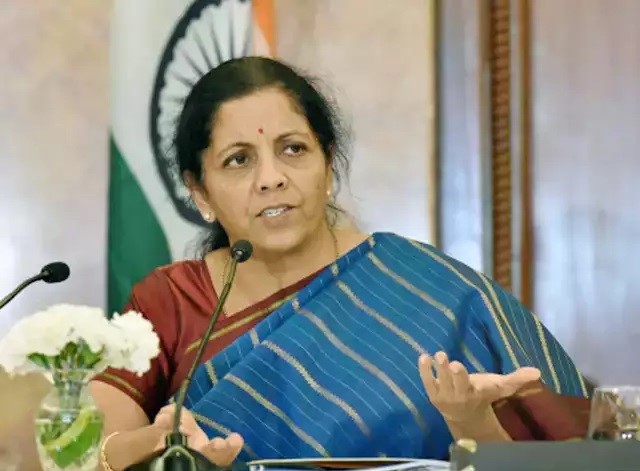
Srinagar: Finance Minister Nirmala Sitharaman, in her response to the Union Budget discussion in the Lok Sabha, emphasized the government’s dedication to reducing the fiscal deficit and providing substantial aid to Jammu and Kashmir (J&K).
She highlighted a significant financial allocation of Rs 17,000 crore for J&K in this year’s Union Budget, with Rs 12,000 crore designated for the J&K Police.
Sitharaman explained that this financial support allows J&K greater flexibility in investing in development activities. In response to a query from Member of Parliament Mian Altaf Ahmed about the welfare of tribals in J&K, she outlined several initiatives, including projects in healthcare, education, and cultural initiatives aimed at supporting tribal communities.
She noted that, after two decades, forest rights have been guaranteed to tribal communities, with 5,943 forest rights certificates issued. The first-ever survey of the nomadic tribal population has been conducted, and transport facilities have been provided to nomadic tribes and Bakerwals who migrate seasonally.
Migrating communities also received transit accommodation, community kitchens, and medical and veterinary dispensaries.
Furthermore, professional coaching centers, scholarships, and skilling centers benefit 48,000 tribal youth. Eight new hostel buildings, 285 smart schools, and six residential schools have been established, along with the development of 80 schools in tribal areas.
Under the Prime Minister Adarsh Yojana, 186 tribal villages are being developed, and a Tribal Research Institute is being established in Srinagar.
Sitharaman concluded that these initiatives underscore the government’s commitment to the development and welfare of the tribal communities in J&K, ensuring they receive the necessary support and resources for a better quality of life.
To address fiscal challenges, the UT government has enhanced tax and non-tax revenues through improved GST compliance and more efficient billing and collection processes. Additionally, the administration is leveraging central funds, accelerating the execution of centrally sponsored schemes, and implementing strict borrowing limits and austerity measures to manage revenue expenditure and public debt effectively.
Lieutenant Governor Manoj Sinha, Chief Secretary Atal Dulloo, and Principal Secretary Finance Santosh Vaidya spearheaded these efforts, which resulted in a special financial support package of ₹17,000 crore from the Union Government.
This package includes ₹12,000 crore allocated for the Jammu and Kashmir Police and an additional ₹5,000 crore in special grants. This substantial support is expected to reduce the fiscal deficit to 3.0% of GDP for the 2024-25 financial year, with overall central assistance for Jammu and Kashmir estimated at ₹67,133 crore.
The budget for 2024-25 totals approximately ₹1,18,390 crore, with ₹81,486 crore designated for revenue expenditure and ₹36,904 crore for capital expenditure.
Major allocations include ₹9,400 crore for power subsidies and agreements, ₹3,983 crore for road and bridge construction, and ₹1,875 crore for upgrading school infrastructure and services.
Additionally, ₹1,808 crore is allocated for decentralized governance, while ₹1,714 crore is earmarked for rural water connectivity under the Jal Jeevan Mission. Urban development projects receive ₹1,484 crore for smart city initiatives, flood recovery, and new housing.
The budget also focuses on social security with ₹1,430 crore for assistance schemes, ₹1,317 crore for health sector improvements, and ₹1,104 crore for rural housing. Support for Kashmiri migrants includes ₹1,068 crore for transit accommodation and other aid.
The agricultural sector benefits from ₹1,021 crore for development programs, while industrial growth receives ₹923 crore in incentives and infrastructure support. Hydro projects are allocated ₹776 crore, and universal health insurance receives ₹586 crore. Other key areas include education upgrades, tourism development, sanitation, and flood management, with significant funds allocated to each.
Additional initiatives include a $100 million loan from IFAD for agricultural projects, development of new tourist destinations, extensive road and infrastructure projects, and advancements in health and education. The budget outlines a comprehensive plan to meet the region’s developmental needs while maintaining fiscal stability.